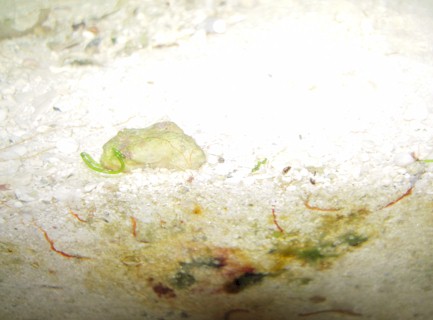
They’re many suitable substrates for growing marine plants in the aquarium. The composition, depth and size of the substrate used is largely based on the individual species of macro algae or sea grass desired. Many commercial products are available to hobbyists for use with marine plants, but most are marketed for the refugium. Although macro algae does not derive any nutrients directly form the substrate, with the exception of sea grass, some type of substrate is usually needed for most species so that they can readily attach themselves. By far, the most popular substrate is the use of a fine grade aragonite sand at varying depths of up to 6” or more. Fine grade sand is readily colonized by most all Caulerpa species and is generally the easiest to maintain. There are also proven benefits to providing a deep sand bed to reduce nitrates and to culture marine fauna, but macro algae only require about 1” or less to attach and grow. Sea grass, however, does require a deep sand bed as its root system can extend quite deep, as much as 12”.
Careful attention should be taken to not introduce substrate to the aquarium that is too compacted, such as silica or quartz sand as this will most likely cause a dense anaerobic layer in the sand bed that can be toxic to tank inhabitants if disturbed. If a mixed macro algae and sea grass system is desired, it would need to devote some portion of the aquarium to a deep sand bed in order to successfully grow vascular plants. For the most part, a mixture of substrates will create an environment suitable for the addition of most any species desired. Most commonly available substrates are composed of variable amounts of aragonite and/or calcite. Aragonite is beneficial in its ability to properly buffer the aquarium water, helping to maintain both ph and alkalinity. Smaller grain sizes dissolve faster while coarse media such as crushed coral is much slower to break down requiring a higher ph to dissolve. Marine plants that do well in a fine to medium grade aragonite sand include most species of Caulerpa and calcified algae such as shaving brush & mermaids fan, as well as sea grass.
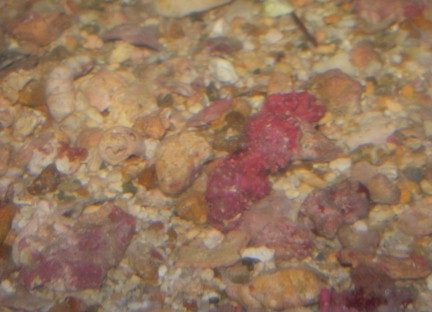
Coarse media such as crushed coral, shell or live rock rubble can also be used to anchor marine plants and is a good choice if a deep sand bed is not needed, especially in the refugium. The only drawback to using coarse sand/rubble is that it tends to collect detritus and sediment, often becoming a nutrient trap over time. In marine plant dominated aquariums this can be an added benefit however, as high levels of nutrients are needed for long term success. Some invertebrates are better suited to this environment, such as amphipods, while other soft bodied invertebrates desire a less abrasive environment. Most varieties of red and brown macro algae grow on rocks and hard bottom habitats in their natural environment, so a coarser substrate is more suited for anchoring. Marine macro algae such as Gracilaria, Botryolcadia, Sargassum and Halymenia can be glued or placed between rocks/rubble and will readily attach themselves. Most all macro algae are very adaptable, and will grow free floating or attach to most any surface, including substrate, live rock or even the sides or bottom of aquariums.
During the early 1990’s, mud filters began to gain in popularity for use in the refugium. Several manufacturers began offering a product that would duplicate tropical coastal environments, such as lagoons and mangrove habitats. These products claim to provide a variety of trace elements including, calcium, iodine, strontium, iron, and free carbon. The idea behind the “mud” was to provide a replenishing source of nutrients by slowly releasing them into the aquarium water. These types of substrates can be problematic long term as they will often become acidic and can effect the ph of the aquarium.
Keep in mind that in any macroalgae dominated system, any type of substrate will eventually get colonized with organic material and will need to be either removed or siphoned off the surface. Limiting the overall depth of substrate in both the refugium and or aquarium can make it easier to maintain the health of the sand bed. Some hobbyists even favor a bare bottom system with no substrate and only live rock for filtration where the detritus and sediment can be easily siphoned out.