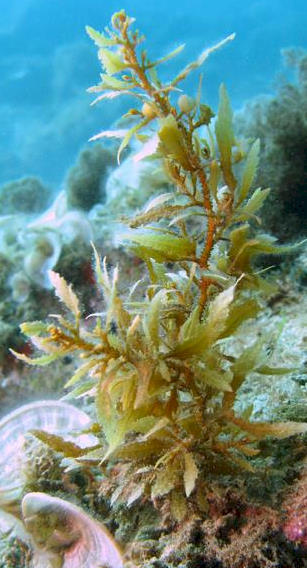
Sargassum platycarpum

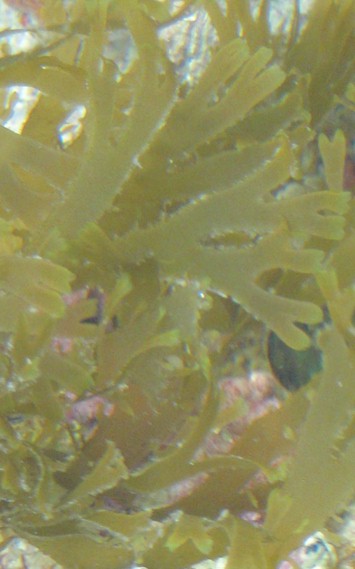
Species of the brown algae Sargassum are among the most prolific of all brown algae in the Caribbean.  This particular species features serrated, gold-brown leaves that form from a series of thick, main branches. Air bladders are common on this species and help to keep the plant upright. Mature plants often reach heights of 30″ or more in deeper environments, but most are found in shallow water. Anchored varieties are most suitable for the marine aquarium and have a very sturdy holdfast that is able to securely anchor itself in very turbulent environments. In the aquarium they require bright lighting and moderate to high flow rates for optimal growth. A large plant, that needs to be pruned often. Not known to be very palatable to fish.
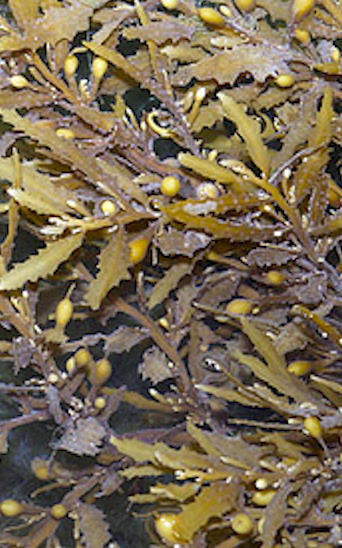
Scientific Name: Sargassum platycarpum

Common Name: Sargassum

Origin: Gulf of Mexico, Caribbean, Atlantic

Depth Collected: 3 – 20 feet

Maximum Height : 30″

Growth Rate: Slow

Light: High

Temperature: 68-78

Propagation: Fragmentation, Sporulation

Difficulty: Advanced

Food Value: Not very palatable

Nutrient Uptake: Fair

Flow Rate: Moderate to High
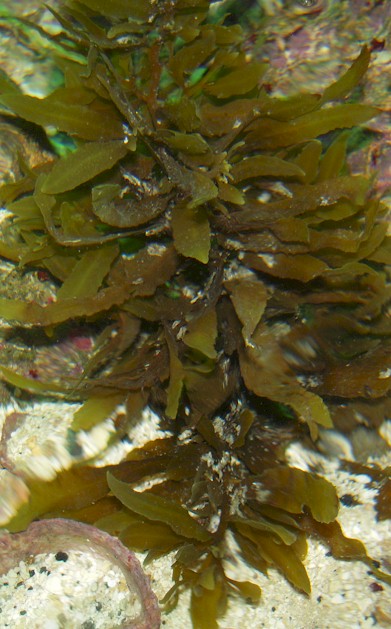
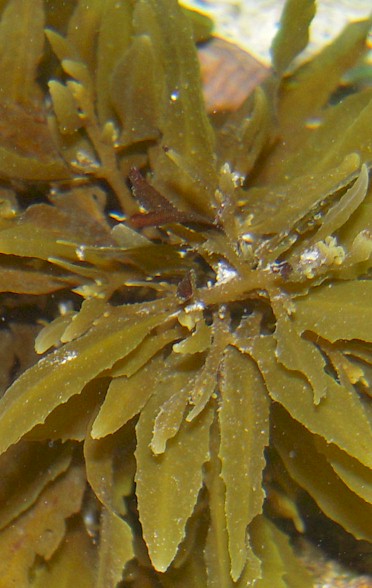
Sargassum hystrix sp.

Species of the brown algae Sargassum are among the most prolific of all brown algae in the Caribbean. These include both the anchored and free floating varieties. As a group, they are highly variable in shape, size and distribution and can survive in much cooler water than other tropical macro algae. The anchored varieties are of the most interest to the aquarium hobby, as the free floating patches such as S. fluitans are not easily kept. This species features elongated, dark brown leaves with a distinctive white mid rib. This particular variation, identified as buxifolium (pictured) shares the same basic characteristics, but lacks the pronounced mid rib.  It’s a shallow water variety, found in depths of up to 50ft, that grows attached to rocks or other hard surfaces by a single holdfast. Most anchored varieties have a very sturdy, thick upright, that is able to securely anchor itself in very turbulent environments. In the aquarium they require bright lighting and moderate to high flow rates for optimal growth.

Scientific Name: Sargassum hystrix sp.

Common Name: Sargassum

Origin: Gulf of Mexico, Caribbean, Atlantic

Depth Collected: 3 – 45 feet

Maximum Height : 24″

Growth Rate: Slow

Light: High

Temperature: 68-78

Propagation: Fragmentation, Sporulation

Difficulty: Advanced

Food Value: Not very palatable

Nutrient Uptake: Fair

Flow Rate: Moderate to High
Padina sp.

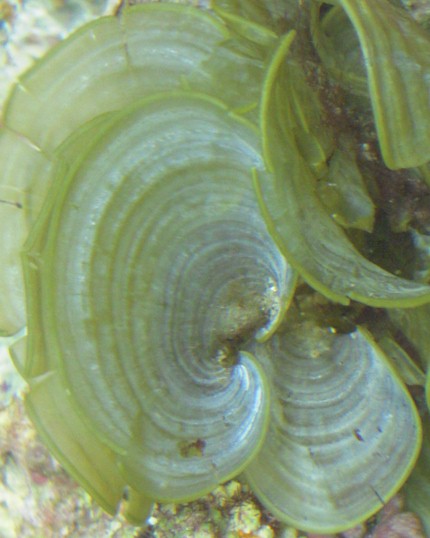
Species of Padina are a very beautiful and interesting brown macro algae. Coloration is highly variable depending on each individual species, ranging from dark brown, tan, green with some iridescence. Some species have rounded blades while others have split, irregular growth. The most common is Padina sanctae crucis (pictured). Species of Padina are the only brown algae that is calcified, so calcium must be maintained for growth in the aquarium. Like many of the calcified algae, it is quite common for coralline algae to grow on the surface of the blades, which gives it a beautiful appearance. All species feature scroll like cups that have a series of rings resembling the trunk of a tree. Padina features a single holdfast that securely anchors to rocks, shells and coral fragments. It prefers a slightly colder water temperature, around 76 degrees or so. It’s a slow grower that requires strong current in the aquarium and calcium supplementation.

Scientific Name: Padina sp.

Common Name: Scroll Algae, Potato Algae

Origin: Gulf of Mexico, Caribbean, Atlantic

Depth Collected: 3 – 40 feet

Maximum Height : 6″

Growth Rate: Slow

Light: Moderate to High

Temperature: 75-80

Propagation: Fragmentation, Sporulation

Difficulty: Advanced

Food Value: Somewhat palatable to fish and inverts

Nutrient Uptake: Fair

Flow Rate: Moderate to High
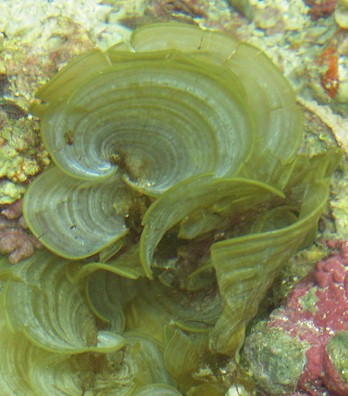
Lobophora sp.

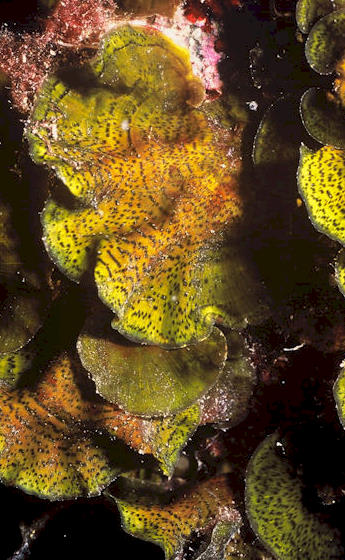
Species of the brown algae Lobophora are very similar in shape and  composition to Padina but not related. It features smooth, ruffled discs, with white edges. The coloration varies from brownish-yellow to mottled green. Depending on the species, it can grow in variable depths and environments, from 3 feet to up to 100ft deep. Unlike Padina, it’s not calcified, but has a rubbery or fleshy texture. It’s a fairly slow grower and overall an excellent species for the aquarium. It does well under full spectrum light with moderate flow. It is somewhat palatable to fish or invertebrates.

Scientific Name: Lobophora sp.

Common Name: Unknown

Origin: Gulf of Mexico, Caribbean, S. Pacific

Depth Collected: 3 – 100 feet

Maximum Height : 10 blade”

Growth Rate: Moderate

Light: Moderate to Low

Temperature: 78-82

Propagation: Fragmentation, Sporulation

Difficulty: Moderate

Food Value: Somewhat palatable

Nutrient Uptake: Good

Flow Rate: Moderate to Low

Dictoya Sp.

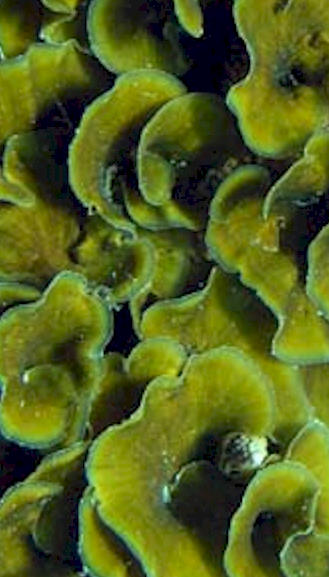
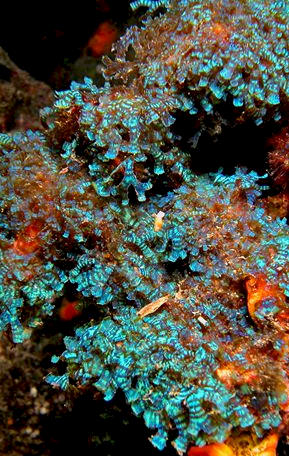
Species of the brown algae Dictoya are highly variable in size, shape and coloration. Some feature a brilliant blue iridescence, while others are more olive brown, such as Dictoya cervicornis. (pictured below) They’re fast growers that are abundant in the shallow reef flats as well as deeper coral reefs. The blades are flat and thin and often form entangled clumps attached to rocks, shells and hard bottom habitat. All varieties are very delicate, tear easily and can often clog pumps and filters. When introduced to the aquarium, many species are highly invasive and can be a nuisance, especially in reef aquaria.

Scientific Name: Dictoya Sp.

Common Name: Iridescent Algae

Origin: Worldwide Distribution

Depth Collected: 3 – 50 feet

Maximum Height : 12″

Growth Rate: Moderate

Light: Moderate to High

Temperature: 72-86

Propagation: Fragmentation, Sporulation

Difficulty: Moderate

Food Value: Somewhat Palatable

Nutrient Uptake: Good

Flow Rate: Moderate to High