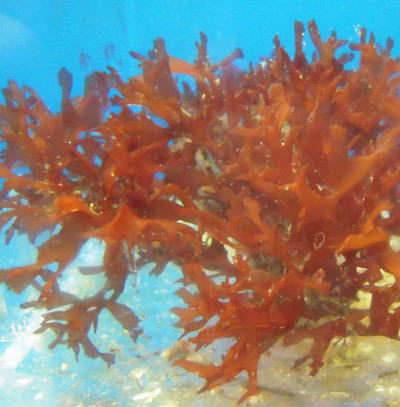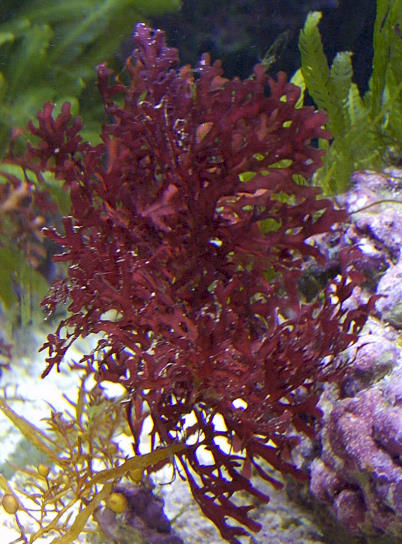
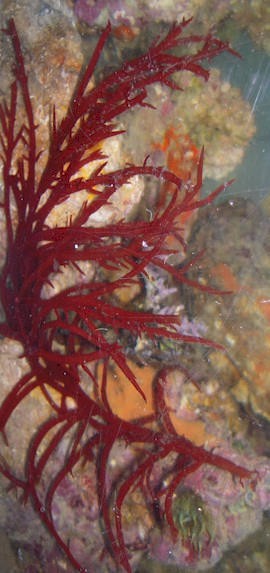
Gracilaria tikvahiae

All species of Gracilaria are highly variable depending on the environment collected, which can make proper identification difficult. G. tikvahiae features a orange to deep red coloration with long, slender, somewhat flattened branches attached by a single holdfast. This species is found in depths of 10ft to about 40ft, attached to hard bottom and rock outcroppings. Species of tikvahiae can also be encountered as free floating specimens, lacking any holdfast, composed of a large circular clump. This particular red algae does very well in the marine aquarium or refugium and is a great food source for fish. It’s growth is slow to moderate depending on the availability of light and nutrients. Most species of Gracilaria will do well in captivity under a variety of conditions as long as there are sufficient nutrients present. Tumbling the algae aids in keeping the tissue in constant suspension with the water for optimum health. This species is very palatable to tangs and angels as well as other herbivores.
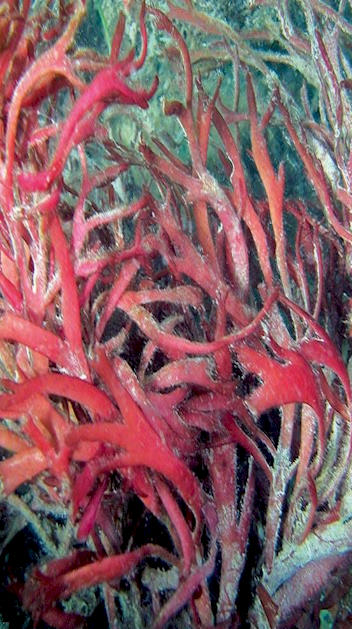
Scientific Name: Gracilaria tikvahiae

Common Name: Red Gracilaria

Origin: Gulf of Mexico. Atlantic, Caribbean

Maximum Height : 16″

Growth Rate: Moderate

Light: Moderate to High

Temperature: 78-86

Propagation: Fragmentation, Sporulation

Difficulty: Easy

Food Value: Palatable

Nutrient Uptake: Good

Flow Rate: Moderate
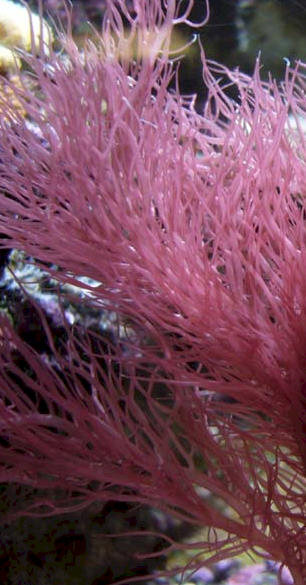
 

Gracilaria parvisipora

This species of Gracilaria features long, cylindrical, alternating branches that are attached by a single holdfast to rubble, shells and hard bottom habitats. The coloration varies depending on the depth collected and ranges from bright red to yellow or green. Gracilaria parvispora is a very popular species of macro algae used among marine aquarists and cultivated commercially. It’s easily grown under a variety of conditions and provides an excellent food source to many herbivorous fish and invertebrates. It’s typically not as attractive in the aquarium as some other species of Gracilaria, but has enjoyed a long history of use in the refugium and reef aquariums worldwide.

Scientific Name: Gracilaria parvisipora

Common Name: Red Gracilaria

Origin: Gulf of Mexico. Atlantic, Caribbean, S. Pacific

Maximum Height : 14″

Growth Rate: Moderate

Light: Moderate to High

Temperature: 78-86

Propagation: Fragmentation, Sporulation

Difficulty: Easy

Food Value: Very palatable to Fish and Invertebrates

Nutrient Uptake: Good

Flow Rate: Moderate to High
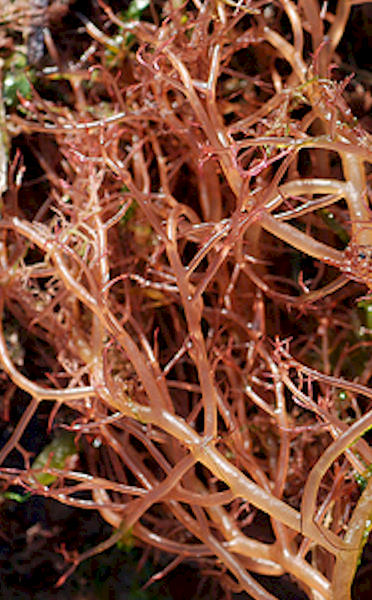
Gracilaria hayi

An attractive species of Gracilaria featuring rigid, lobe shaped branches that form a tight symmetrical bush. It’s lightly calcified so the addition of calcium is recommended. It grows mainly in shallow, protected, high nutrient habitats attached to sponges, shell and rocks. It often hosts other algae species and is frequently covered in colonial tunicates or encrusted with epiphytic bryozoans. The coloration varies between deep crimson red to bright orange depending on the amount of light provided. It’s found attached by a single holdfast or found tumbling in drift algae mats. Overall it’s one of the easiest marine macro algae to keep and will grow well under a variety of conditions. Due to it’s lightly calcified branches this species isn’t known to be very palatable to fish or invertebrates.

Scientific Name: Gracilaria hayi

Common Name: Red Bush, Fire Algae

Origin: Gulf of Mexico, Caribbean, Tropical Atlantic

Maximum Height : 10″

Growth Rate: Medium

Light: Moderate to Low

Temperature: 78-82

Propagation: Fragmentation, sporulation

Difficulty: Easy

Food Value: Not very palatable

Nutrient Uptake: Excellent

Flow Rate: Moderate