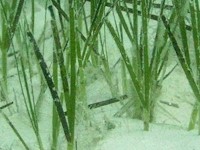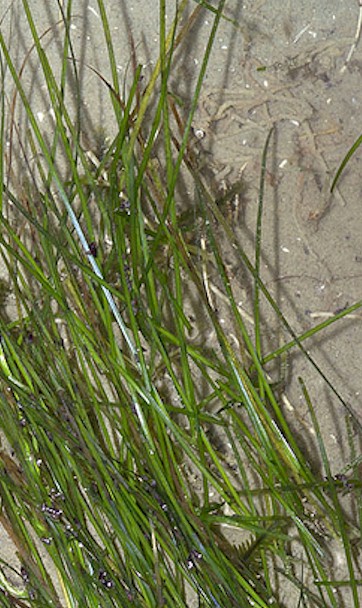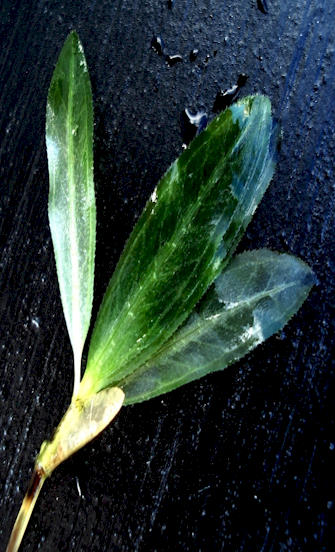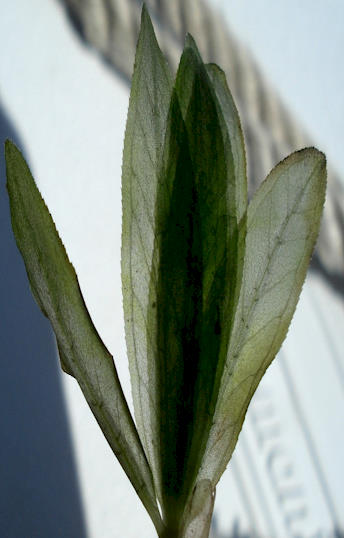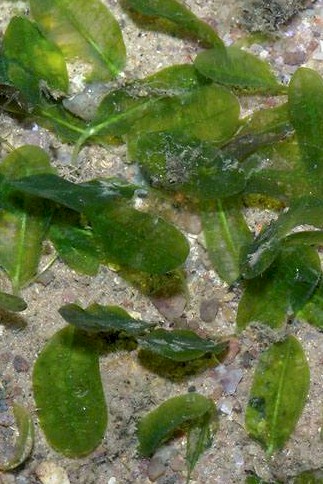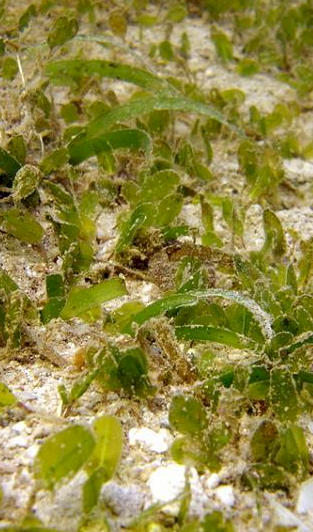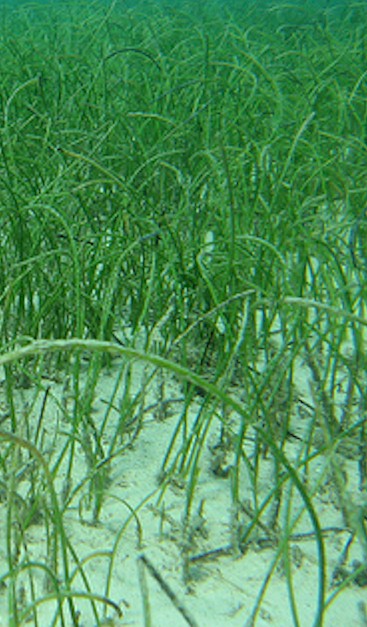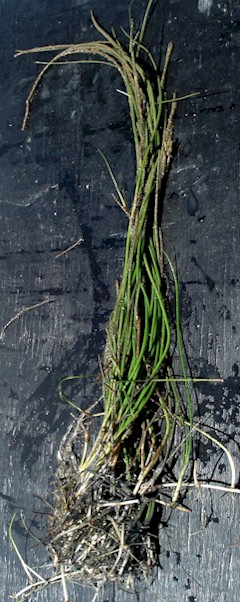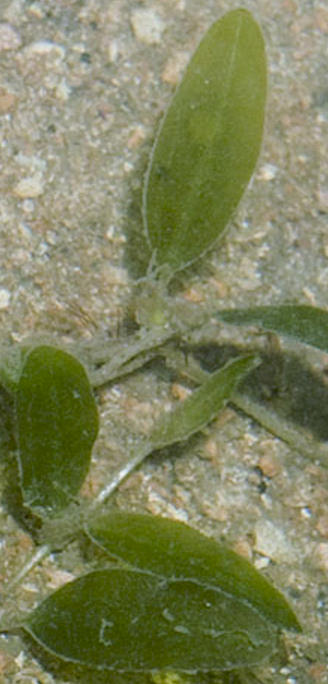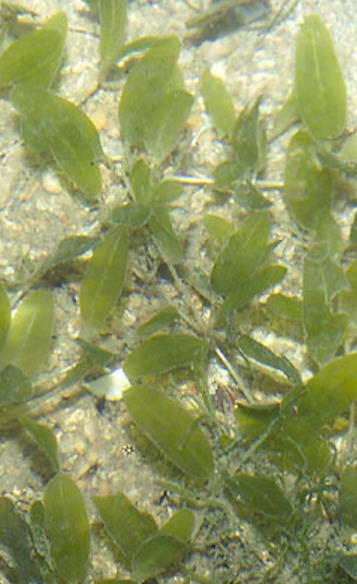
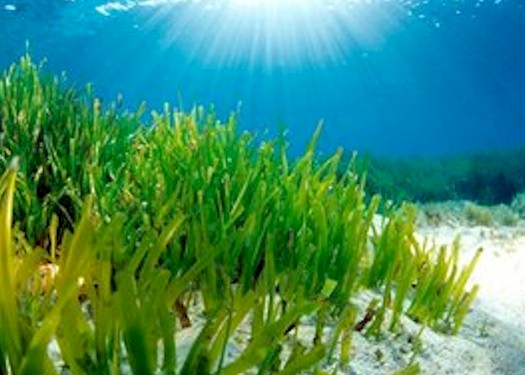
Species of Thalassia are the most abundant marine plant in the Caribbean. A flat bladed, dark green sea grass featuring an extensive root system that securely anchors and protects the plants from tidal surge, storms and ocean currents. The leaves are ribbon-like, about ½ inch wide and often reach heights of up to 14 inches long. Turtle Grass, like most sea grasses, are very adaptable to survive in a wide range of salinities, ranging from 20 ppt. to 40 ppt. It can also survive exposure to air at low tide levels. Once the root system is disturbed or damaged it will not repair itself, which is why it can take a year or more for damaged beds to become restored. In the aquarium it requires a moderate depth of sediment (6-8″ minimum) for its deep rhizome network. The root system spreads by lateral growth of the rhizomes at their ends and is the most common form of reproduction. Sand beds that are rich in organic material are best, but plants can be fertilized by inorganic means such as dry and liquid plant food.
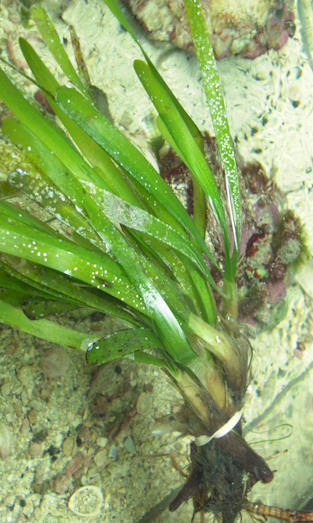
Scientific Name: Thalassia testudinum
Common Name: Turtle Grass
Origin: Gulf of Mexico, Atlantic, Caribbean
Depth Collected: 4 -80 Feet
Maximum Height : 14″
Growth Rate: Slow
Light: High
Temperature: 78-86
Propagation: Rhizomes, Seeds
Difficulty: Advanced
Food Value: Palatable to some fish
Nutrient Uptake: Good once established
Flow Rate: Moderate to High