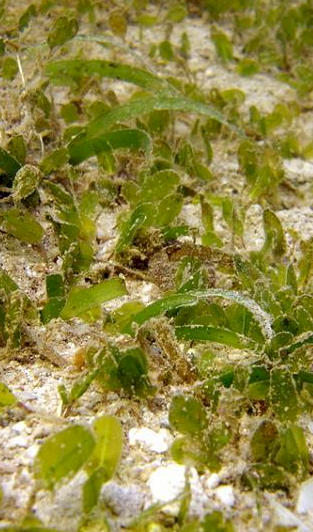
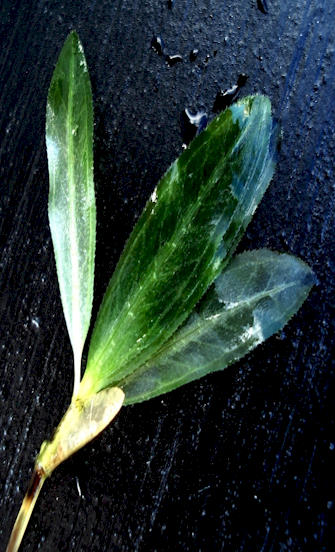
Halophila engelmannii

Halophila engelmannii, more commonly know as Star Grass, is an interesting sea grass that is tolerant of cooler water temperatures. It is found growing in the waters of Florida, Louisiana, Mississippi and Texas. It features a tall upright that forms a cluster of 4-6 elongated leaves, resembling the algae Caulerpa paspaloides. Single plants grow to about 4-6″ tall. The root system spreads by lateral growth of the rhizomes at their ends and is the most common form of reproduction. Flowering is more productive in this species and it spreads throughout the ocean by the production of seeds. Sand beds that are rich in organic material are best suited for most sea grasses, but plants can be fertilized by inorganic means such as dry and liquid plant food. Overall, Star Grass is very hardy, requires only a sand bed of about 4″, and can be kept successfully with moderate to low lighting. It is rarely offered to hobbyists, but occasionally shows up in the aquarium industry when specimens can be collected.
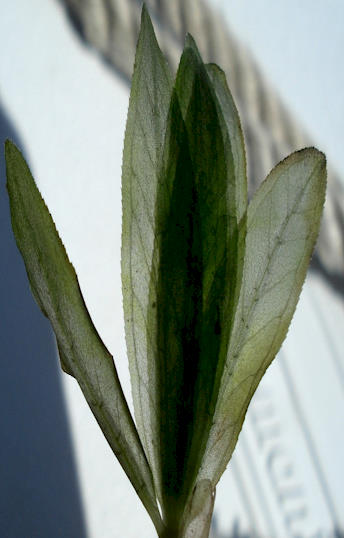
Scientific Name: Halophila engelmannii

Common Name: Star Grass

Origin: Gulf of Mexico, Atlantic, Caribbean

Depth Collected: 4-100 Feet

Maximum Height : 6″

Growth Rate: Slow

Light: Moderate

Temperature: 68-82 Degrees

Propagation: Rhizomes, Seeds

Difficulty: Moderate

Food Value: Not Palatable

Nutrient Uptake: Good once established

Flow Rate: Low to Moderate
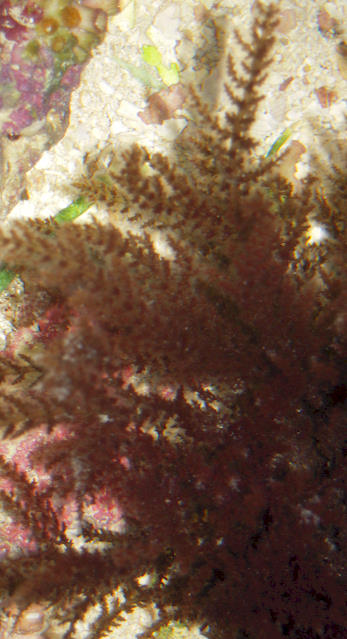
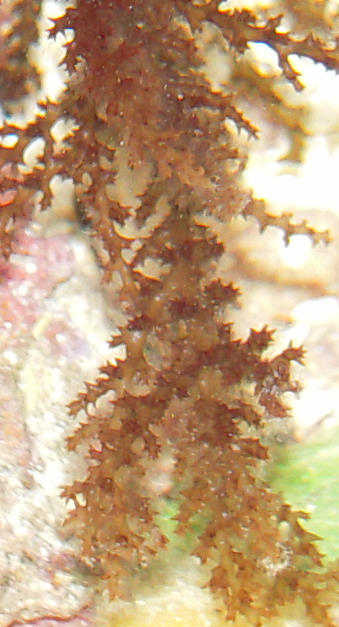
Ancanthopora spicifera

This interesting red macro algae is one of the only species that has a brown coloration. It features tall, irregular and stiff uprights composed of smaller, pointed branches. It is often confused with Laurencia as it has similar characteristics, but the branches of this species are much finer and more compact. This species has a single holdfast that attaches to rocks, shells and other hard bottom habitat, typically in shallow costal habitats with strong tidal surge. A fast grower, it can be invasive in reef aquariums so care must be taken to regularly prune each specimen. It’s collected in shallow water from the low tide zone to depths of about 10ft. If placed under strong lighting, it often has a brilliant white appearance.

Scientific Name: Ancanthopora spicifera

Common Name: Fire Fern

Origin: Gulf of Mexico. Atlantic, Caribbean

Maximum Height : 8″

Growth Rate: Moderate

Light: Moderate to High

Temperature: 78-86

Propagation: Fragmentation, Sporulation

Difficulty: Easy

Food Value: Not very palatable

Nutrient Uptake: Good

Flow Rate: Moderate to High

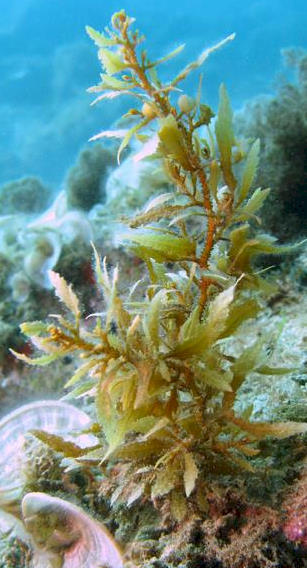
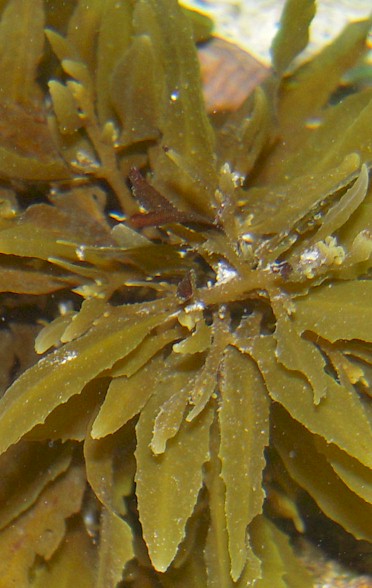
Sargassum platycarpum

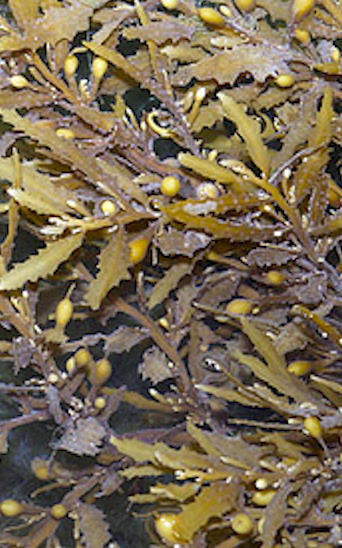
Species of the brown algae Sargassum are among the most prolific of all brown algae in the Caribbean.  This particular species features serrated, gold-brown leaves that form from a series of thick, main branches. Air bladders are common on this species and help to keep the plant upright. Mature plants often reach heights of 30″ or more in deeper environments, but most are found in shallow water. Anchored varieties are most suitable for the marine aquarium and have a very sturdy holdfast that is able to securely anchor itself in very turbulent environments. In the aquarium they require bright lighting and moderate to high flow rates for optimal growth. A large plant, that needs to be pruned often. Not known to be very palatable to fish.

Scientific Name: Sargassum platycarpum

Common Name: Sargassum

Origin: Gulf of Mexico, Caribbean, Atlantic

Depth Collected: 3 – 20 feet

Maximum Height : 30″

Growth Rate: Slow

Light: High

Temperature: 68-78

Propagation: Fragmentation, Sporulation

Difficulty: Advanced

Food Value: Not very palatable

Nutrient Uptake: Fair

Flow Rate: Moderate to High

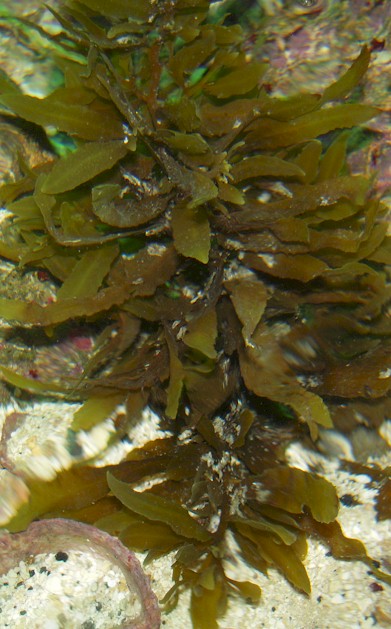
Sargassum hystrix sp.

Species of the brown algae Sargassum are among the most prolific of all brown algae in the Caribbean. These include both the anchored and free floating varieties. As a group, they are highly variable in shape, size and distribution and can survive in much cooler water than other tropical macro algae. The anchored varieties are of the most interest to the aquarium hobby, as the free floating patches such as S. fluitans are not easily kept. This species features elongated, dark brown leaves with a distinctive white mid rib. This particular variation, identified as buxifolium (pictured) shares the same basic characteristics, but lacks the pronounced mid rib.  It’s a shallow water variety, found in depths of up to 50ft, that grows attached to rocks or other hard surfaces by a single holdfast. Most anchored varieties have a very sturdy, thick upright, that is able to securely anchor itself in very turbulent environments. In the aquarium they require bright lighting and moderate to high flow rates for optimal growth.

Scientific Name: Sargassum hystrix sp.

Common Name: Sargassum

Origin: Gulf of Mexico, Caribbean, Atlantic

Depth Collected: 3 – 45 feet

Maximum Height : 24″

Growth Rate: Slow

Light: High

Temperature: 68-78

Propagation: Fragmentation, Sporulation

Difficulty: Advanced

Food Value: Not very palatable

Nutrient Uptake: Fair

Flow Rate: Moderate to High

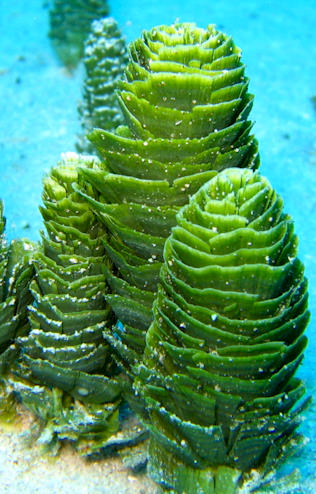
Rhipocephalus phoenix

A very beautiful calcified algae that’s spherical in shape, resembling a pinecone or christmas tree. It’s native to the reef flat, it grows in sandy substrate among sea grass beds and Halimeda forests. There are several distinct species, including brevifolius and longifolius that are similar in shape and characteristics. Its root-like structure is a large bulb with a series of rhizoids that anchor it to substrate, and sometimes rocks. Mature plants only reach a height of about 6″. Like most calcareous stem plants, it needs a deep sand bed of 4″ or more to grow in the aquarium. Calcium supplementation is needed. Not palatable to fish or invertebrates.

Scientific Name: Rhipocephalus phoenix

Common Name: Pinecone Algae

Origin: Atlantic, Caribbean

Depth Collected: 3-50 Feet

Maximum Height : 6″

Growth Rate: Moderate

Light: Moderate to High

Temperature: 76-86

Propagation: Fragmentation, Sporulation

Difficulty: Easy

Food Value: Not Palatable

Nutrient Uptake: Fair

Flow Rate: Moderate

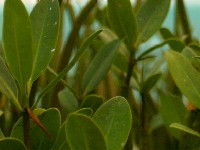
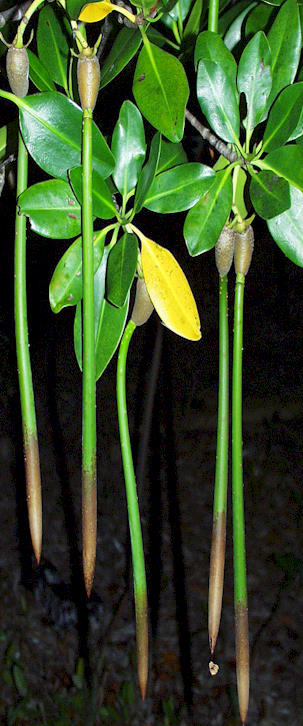
Rhizophora mangle

The red mangrove features expansive branches of aerial roots that are arched above the water line to provide the plant with oxygen before entering the water. These prop roots provide the plant with stability in sandy substrate and help to gather oxygen for underground parts of the plant. Many colorful invertebrates, as well as sponges and algae, colonize the roots in the coastal habitats where they grow. The red mangrove is by far the most important species, due to its ability to prevent erosion by actually building land structures and miniature islands over time. Mature trees can reach heights of up to 80 feet. In the aquarium it is very hardy and only requires minimal care once established. The pencil shaped seeds can be inserted and floated in small pieces of styrofoam, staked to the substrate with dowels or pvc pipe, or simply planted so that the leaves are above the water line. The leaves should be periodically sprayed with fresh water to remove salt deposits. All mangroves are slow growing in the aquarium and are not as efficient at removing nutrients as algae and sea grasses are. However, they have their place in the hobby as an interesting and functional part of a marine ecosystem. The red mangrove is readily available to the aquarist as both a seed and seedling from various marine life collectors and nurseries.

Scientific Name: Rhizophora mangle

Common Name: Red Mangrove

Origin: Gulf of Mexico, Atlantic, Caribbean

Depth Collected: low tide zone

Maximum Height : 80′

Growth Rate: Slow

Light: High

Temperature: 60-100

Propagation: Rhizomes, Seeds

Difficulty: Easy

Food Value: None

Nutrient Uptake: Fair once established

Flow Rate: Low


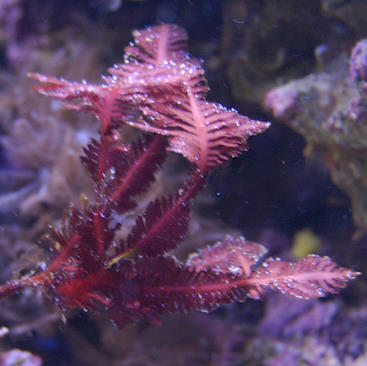
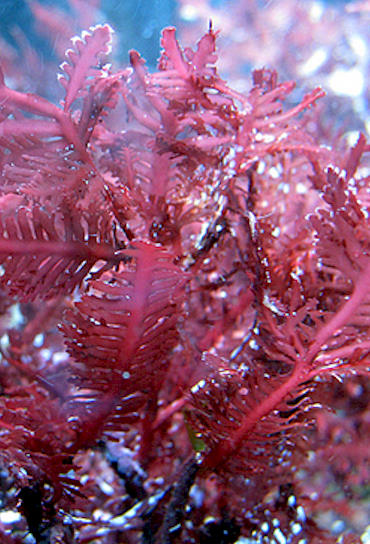
Haliptilon sp.

A very popular species of red algae for use in the aquarium. Species of Haliptilon feature calcified or heavily calcified branches with fern or feather shaped blades. Depending on the individual species, they are red or pinkish in coloration and typically grow in the reef flat and tidal zone on rocks and as epiphytic algae on other plants. Currently the red fern (left) is the only species of Haliptilon available in the aquarium hobby today. It’s typically found as a colony or multiple colonies attached to smaller pieces of imported live rock. Although most species of Haliptilon are considered temperate water algae, they can tolerate warmer temperatures and do very well in the marine aquarium.

Scientific Name: Haliptilon sp.

Common Name: Red Fern, Smooth Kelp

Origin: Indonesia, S. Pacific

Maximum Height : 8″

Growth Rate: Moderate

Light: Moderate to High

Temperature: 60-78

Propagation: Fragmentation, Sporulation

Difficulty: Easy

Food Value: Somewhat Palatable

Nutrient Uptake: Fair

Flow Rate: Moderate

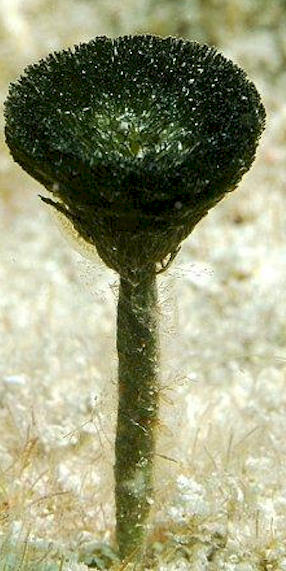
Penicillus pyriformis

A unique species of Penicillus that features a tall thin stem with fine tapered filaments and a flattened top. This particular species can grow much taller than other species of Penicillus, up to about 8″ . It’s abundant on the reef flat and among sea grass beds.  Its root-like structure is a large bulb with a series of rhizoids that anchor it to substrate and sometimes rocks. It occurs in shallow calm protected water, but is also found as deep as 100 ft. In the aquarium the mature plant often dies to produce new plants at its base. Like most calcareous stem plants, it needs a deep sand bed of 4″ or more to grow in the aquarium. Calcium supplementation is needed. Not palatable to fish or inverts.

Scientific Name: Penicillus pyriformis

Common Name: Shaving Brush

Origin: Atlantic, Caribbean

Depth Collected: 1-30 Feet

Maximum Height : 8″

Growth Rate: Moderate

Light: Moderate to High

Temperature: 76-86

Propagation: Fragmentation, Sporulation

Difficulty: Easy

Food Value: Not Palatable

Nutrient Uptake: Fair

Flow Rate: Low to Moderate
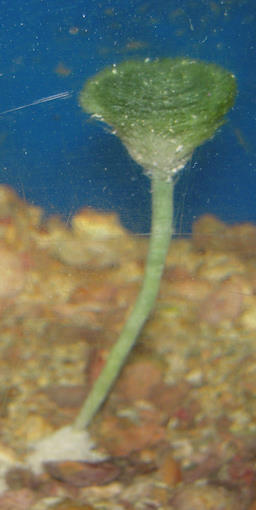
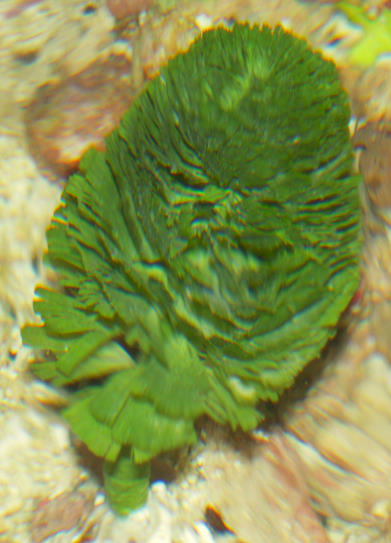
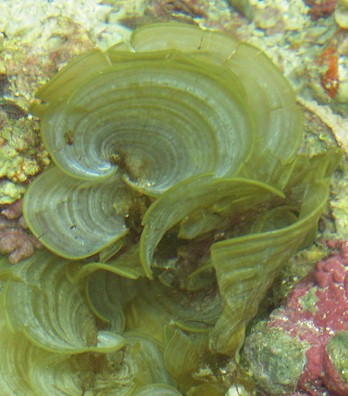
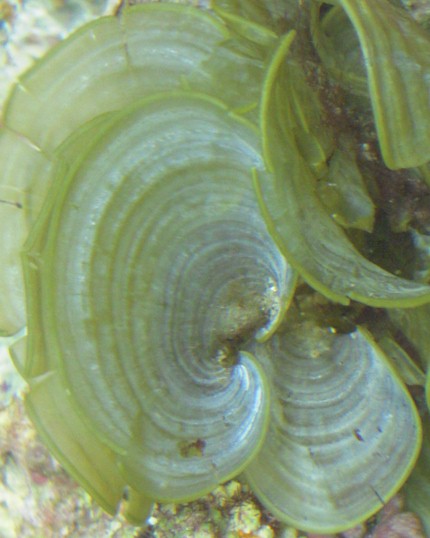
Padina sp.

Species of Padina are a very beautiful and interesting brown macro algae. Coloration is highly variable depending on each individual species, ranging from dark brown, tan, green with some iridescence. Some species have rounded blades while others have split, irregular growth. The most common is Padina sanctae crucis (pictured). Species of Padina are the only brown algae that is calcified, so calcium must be maintained for growth in the aquarium. Like many of the calcified algae, it is quite common for coralline algae to grow on the surface of the blades, which gives it a beautiful appearance. All species feature scroll like cups that have a series of rings resembling the trunk of a tree. Padina features a single holdfast that securely anchors to rocks, shells and coral fragments. It prefers a slightly colder water temperature, around 76 degrees or so. It’s a slow grower that requires strong current in the aquarium and calcium supplementation.

Scientific Name: Padina sp.

Common Name: Scroll Algae, Potato Algae

Origin: Gulf of Mexico, Caribbean, Atlantic

Depth Collected: 3 – 40 feet

Maximum Height : 6″

Growth Rate: Slow

Light: Moderate to High

Temperature: 75-80

Propagation: Fragmentation, Sporulation

Difficulty: Advanced

Food Value: Somewhat palatable to fish and inverts

Nutrient Uptake: Fair

Flow Rate: Moderate to High

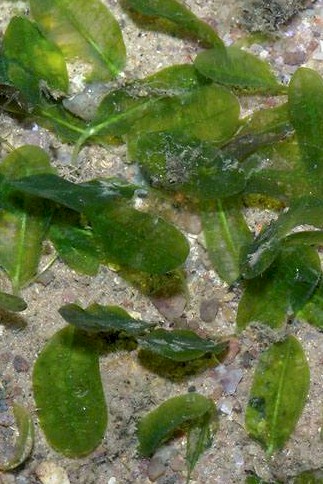
Halophila ovalis

Halophila ovalis is a beautiful species of sea grass native to Asia and the South Pacific. It is commonly referred to a spoon grass or paddle weed. The plants grow from a single rhizome and prefer shallow, calm protected habitats but can be found as deep as 80 feet. Individual leaves grow to about 4″ with a rhizome of up to 2ft long. Halophila tolerate a large range of salinities ranging from 20 ppt. to 40 ppt. This particular species is not usually available to the aquarium trade in the United States, as it is an endangered plant, but is offered by some tropical fish exporters (mainly in the Philippines). Most species of Halophila prefer very organic, soft sand or mud bottom habitats. They are fairly easy to care for in the aquarium, as the root system is shallow, so can even be added to a well equipped refugium. As in all sea grass species, they prefer organic nutrients derived from the sand bed, so will do best in a properly “aged” sand bed and/or substrate.

Scientific Name: Halophila ovalis

Common Name: Spoon Grass

Origin: Indonesia, S. Pacific

Depth Collected: 1-80 Feet

Maximum Height : 5″

Growth Rate: Moderate

Light: High

Temperature: 72-86

Propagation: Rhizomes, Seeds

Difficulty: Moderate

Food Value: Not Palatable

Nutrient Uptake: Good once established

Flow Rate: Low to Moderate