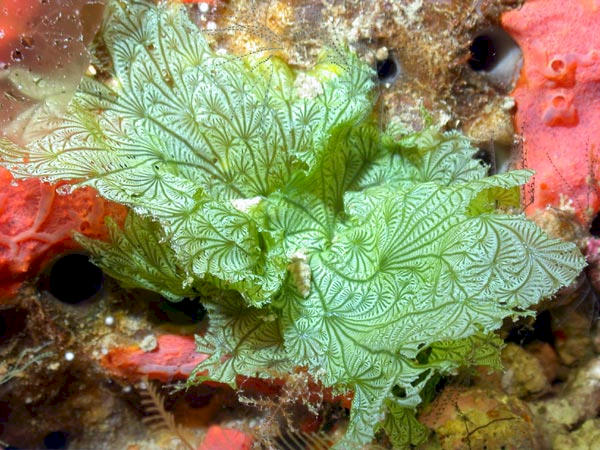
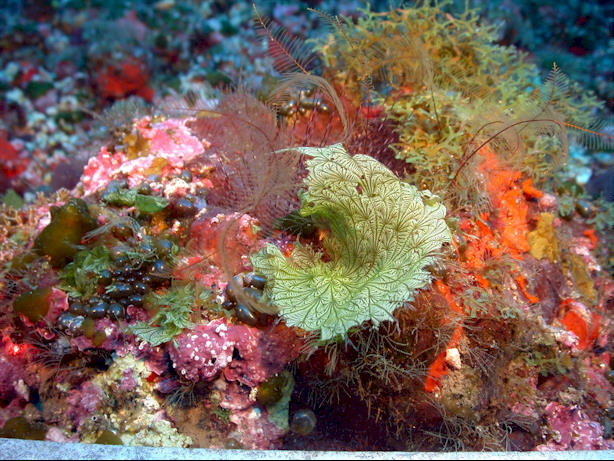
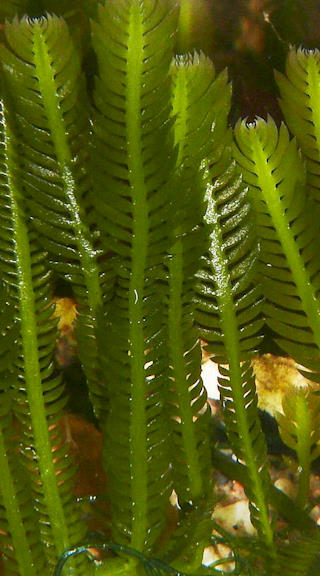
Anadyomene is a highly variable green macro algae that grows in depths of 2-100 feet. It features rounded, stiff, irregular shaped blades or lobes that have a distinct pattern of intricate veins when examined closely. There are several species that are occasionally seen in the aquarium industry, but most are attached to collected live rock or amongst harvested calcareous algae. The most commonly available specimens are anadyomene Saladanhae, Stellata, and Cavernosa . Some single specimens can grow in large clumps of up to 10″ in diameter, but in the aquarium growth is much smaller. A slow grower, but a fairly hardy specimen in the marine aquarium.
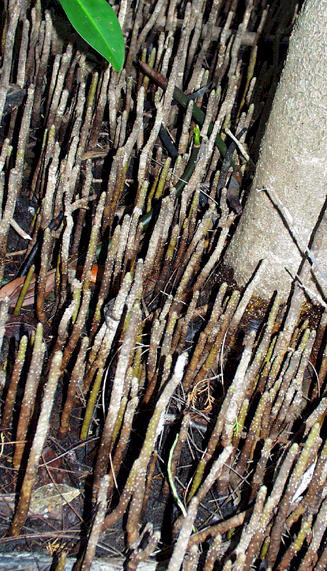
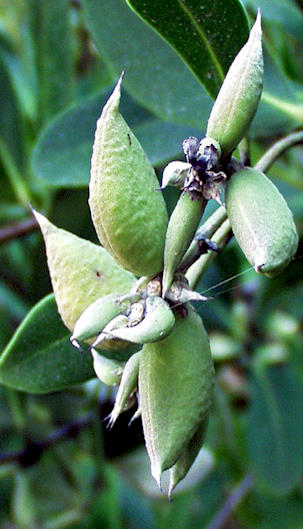
The black mangrove features wide spreading, below ground roots with hundreds of slender, brown, pencil shaped breathing tubes that emerge vertically from the substrate to about a foot high . These are known as pneumatophores and they collect oxygen for the submerged roots. Black mangroves typically grow higher above the low-tide mark than both red and white mangroves so that their breathing tubes are never completely submersed in water. Mature trees can reach heights of up to 70 feet tall. Because of their submersed root system they are not good candidates for use in the marine aquarium. As with the white mangrove, they can be grown in specific aquarium biotopes if elevated in substrate above the water line.
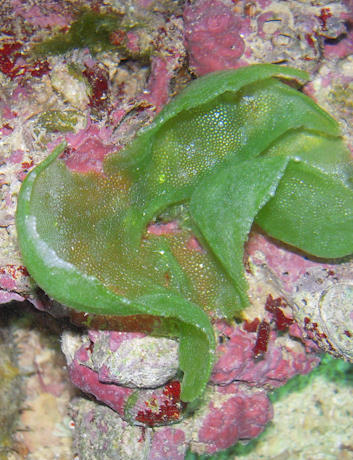
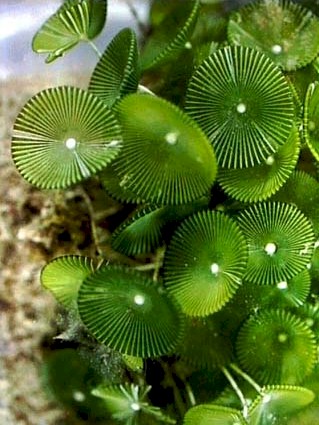
Acetabularia is a unique and beautiful species of green algae. It features a lightly calcified stem that hosts a single disc like appendage. There are many species of this unique algae, some with more pronounced cup shaped tops and varying shades of green coloration. When removed from the water, care must be taken as the tops can not be supported by the thin stem and will often break off. New colonies can be started by a single disc, although the growth is very slow. Specimens grow in shallow, protected environments often attached to shells, mangrove roots and other hard surfaces. This species requires a brightly lit, protected area to grow successfully in the aquarium. It can be difficult to harvest as most specimens are attached to rocks, roots and other hard surfaces. The easiest method for collection is to find it growing on a shell or another species of algae. Unfortunately, the lifespan of this species is very short lived and rarely survive very long in captivity.
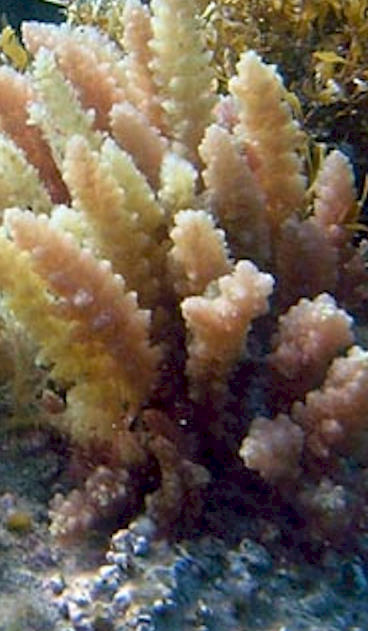
This unique red macro algae is highly variable in coloration depending on the depth collected. Colors range from pale red to pink, with some iridescence. The main branches are cone shaped with soft, fine filaments that are attached firmly to rocks and coral with multiple rhizomes to form dense clusters. It is collected in very shallow, turbulent water and grows rather compactly. This particular algae is rarely seen in the aquarium industry, but shows up occasionally attached to imported live rock from the Pacific. It’s a popular and favorite delicacy in Hawaii, as well as other Pacific islands, and is often imported into the U.S. as a food product. Asparagopsis can be difficult to keep long term in the aquarium and seems to grow in cycles.
The term “marine plants” is often used loosely in the aquarium trade to describe both macro algae and sea grass. Macro algae, unlike sea grass are not true plants but are actually large celled algae. They absorb nutrients through their cell structure instead of the root system as terrestrial plants do. All macro algae are photosynthetic and thus rely on the sun’s energy for food. Marine plants serve as the base of our ocean’s food chain, providing food, oxygen and habitat for thousands of marine inhabitants. Unlike marine plants (sea grass), macro algae lack conductive tissue, true roots, stems and flowers. Instead of roots they have holdfasts or rhizomes in which individual runners support the growth between blades or stalks depending on the species.
Marine plants grown in the aquarium will thrive under the right conditions and offer a replenishing food source to tank inhabitants. In addition to converting sunlight to energy they also require nutrients to grow. It is generally accepted that all marine plants require the same essential nutrients as aquatic and terrestrial plants do. The major nutrients required by marine plants are nitrogen, phosphorus, potassium, sulfur, calcium & magnesium. The minor nutrients are iron, manganese, copper, zinc & molybdenum.
Marine plants are distributed worldwide and are found in some form in almost every ocean on the Earth. There are two distinct habitats where macro algae are found, temperate or cold water algae, and tropical varieties. The tropical and sub tropical species are of most interest to hobbyists to culture, as the cold water species have special needs requiring a climate controlled environment (chiller). Throughout the world, marine algae grow at varying depths and environments so some are more suitable for culture in the aquarium than others. Several species can even be successfully kept with lower light as they are found and collected from deep water habitats, while others need a brightly illuminated habitat to thrive.
There has been much debate among marine aquarists over which individual species are best suited for culture in a refugium or display tank and which should be avoided all together. Some species are fast growing, invasive and can be a nuisance in any aquarium, especially reef tanks. Despite their often invasive qualities, they’re many beautiful species of macro algae that are unlikely to be introduced to non native regions but are easy to grow in a marine aquarium. For the aquarist interested in the culture of macro algae there are hundreds to choose from, but only a few tropical species that are really suitable for aquarium use. It is these species that will be covered in detail.
The three main classifications of marine macro algae are Chlorophyta (green algae), Phaeophyta (brown algae), and Rhodophyta (red algae). They derive their names from the dominant pigments associated with each species. All of these classes also contain slightly calcified or heavily calcified algae, which depend upon properly maintained calcium levels to grow and reproduce. Sea grasses have their own classification (Magnoliophytae or Angiospermae) and will be covered separately. Mangrove plants are also discussed, as they are often used by hobbyists in the marine aquarium. Although their growth is slow and overall nutrient uptake limited, they remain popular additions, especially in a refugium.
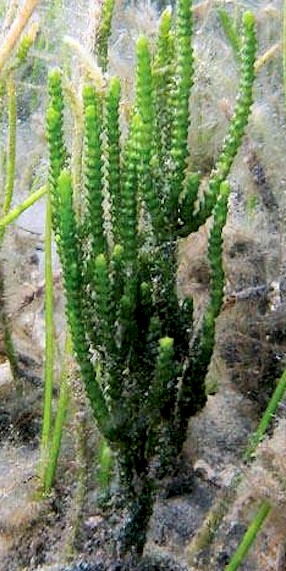
Beginning in the early 1980’s a strain of Caulerpa known as taxifolia was used as a tank decoration in several marine aquariums in Germany and was then successfully propagated and distributed for use in commercial aquariums across the globe. This extremely hardy and more temperature tolerant strain was soon discovered to have escaped into the waters of the Mediterranean and was found growing in large patches near shore. This highly invasive species has since been discovered worldwide, most notably off the coast of California, USA and New South Wales, Australia. The introduction of the hybrid Taxifolia is blamed on the ornamental aquarium industry, reportedly being released only feet from the famous Monaco Aquarium where it was being used as tank decorations. Because of its invasive qualities and toxicity to herbivorous fish, Caulerpa taxifolia and a few others are now banned for sale or distribution in several U.S. states as well as many countries. Needless to say, this particular type of macro algae should be avoided and its popularity and availability has decreased in the United States considerably in the last decade.
Russ Kronenwetter is the owner of Gulf Coast Ecosystems, a wholesale and retail supplier of collected and aqua cultured ornamental marine algae. He is an avid scuba diver and experienced marine life collector, with over 25 years experience in the marine aquarium industry.
My interest with keeping tropical fish began at an early age growing up near the Florida Everglades in South Florida. With a bucket and net in hand, I would often spend entire afternoons with my brother, wading through alligator and snake infested waters in search of freshwater tropical fish for our small aquarium at home. As I grew older, my attention gravitated to the marine aquarium hobby. The fish were more colorful than freshwater varieties and the amount of invertebrates available were interesting and fascinating to me.
I began exploring the shallow coastal tidal pools and protected shorelines of the Atlantic Ocean , collecting marine tropical fish for our home aquarium. About the time when reef aquariums and live rock began to gain in popularity, I was now living on the Gulf Coast of Florida. The fish weren’t as colorful; the water not as clear, but something else was abundant. Marine macro algae were growing everywhere! The warm tropical waters of the Gulf of Mexico in Florida are full of a wide array of fascinating and colorful marine algae. Like many other hobbyists in the early 80’s, most of my interest was with growing various species of hardy Caulerpa. I soon however, began experimenting with growing other more colorful and challenging varieties including both brown and red algae.
My first attempts at culturing marine macro algae were marked with some frustration and failure, but I continued learning and experimenting until I was able to successfully maintain several species in the home aquarium. I was once told by a reputable pet store owner that macro algae couldn’t be grown. He had tried it and was unable to keep it alive for any great period of time. This was years before the “refugium” made its appearance, so keeping marine algae in captivity long term was a relatively new idea and its needs largely unknown. Most of the information contained in this publication is related to both my personal experience and observation. I was originally hesitant to publish the book, as there are others that are much more qualified to do so, but still to date, there remain very few resources for the marine hobbyist.
Let me first say that I am not a biologist, but an avid aquarist with many years of experience maintaining saltwater aquariums. Most literature available on marine plants today is technical and often requires advanced knowledge to understand. In addition, the majority of books on the subject are mostly field guides for students and lack detailed information on aquarium use. The purpose of this publication is to offer a simplified guide for the identification, use and culture of marine macro algae and plants in the aquarium.
Marine macro algae and sea grasses have had a long history of importance throughout the world, with their use dating back to ancient times. Today, many varieties have important economic and commercial value. Marine algae is used in thousands of products including fertilizer, bio-fuel, ice cream and even cosmetics. In several cultures it is highly prized as a food item and is a major part of some island diets. Its appearance in the aquarium industry began sometime in the late 1970’s, with several species of Caulerpa used mainly as tank decorations.
With the many innovations over the past several decades in marine reef keeping, marine plants have increased in popularity among saltwater aquarists and large scale commercial aquariums. Today, many in the aquarium industry favor a more natural approach to marine aquarium keeping. Marine plants not only improve the health of fish and corals in captive systems, but are nature’s nutrient consumers, effectively removing nitrates and phosphates to nearly undetectable levels. Another benefit is the food value of many species of macro algae. In their natural environment, fish and invertebrates feed continuously during the day, consuming large amounts of micro and macro algae.
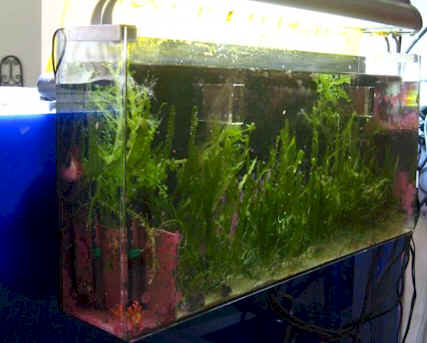
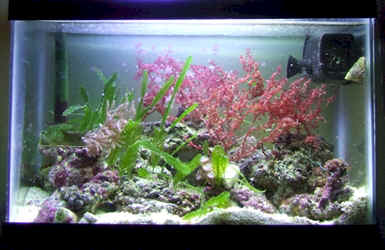
A fairly new trend in the marine aquarium hobby is creating macro algae and sea grass dominated aquariums. These systems are quickly gaining popularity as a change from the normal “reef” setup. They are very popular with marine aquarists that are interested in keeping peaceful fish and invertebrates, such as seahorses, pipefish and dragonets. Just like a freshwater planted aquarium, there’s something alluring and fascinating about the sheltered lagoon habitat where marine plants play host to juvenile fish and invertebrates. The world’s oceans are filled with a fascinating array of marine plants, some so striking and beautiful they often look like creatures from another world. As the marine aquarium hobby progresses, many more of these species should become available for the aquarist to observe and enjoy in the home aquarium.
Finding a reliable source for the purchase of marine plants can be challenging at times. Most varieties are only offered seasonally as they are collected from the wild. The good news is that today the amount of online retailers, as well as pet stores that provide macro algae and sea grass for sale, are increasing annually due to high demand for new and interesting specimens. Some slow-growing and rare species can be very difficult to obtain and are best acquired through a fellow hobbyist or local aquarium club. Just like corals, most cultured macro algae is hardier and more tolerant of aquarium conditions as it has been acclimated to survive under less than optimal conditions. The major cultured varieties are Chaetomorpa, Gracilaria, Ulva and some species of Caulerpa. The best place to purchase marine plants is from your local pet store or hobbyist as these specimens can be examined for health and possible undesirable hitchhikers. As the popularity of the refugium and planted aquariums increases, many pet store owners are realizing the benefits and profitability of carrying different varieties of colorful macro algae for their customers
If you’re unable to locate healthy specimens, most macro algae are very resilient and can be nurtured back to health within a few weeks if given the proper environment. Sea grass specimens however, must be in optimal health with fully intact root systems to survive. Look for specimens that have new growth at the tips or roots and appear healthy and green. Most varieties of red algae will not tolerate any drying of their fronds and should always be submerged or transported completely wet. Healthy specimens of Caulerpa will have new growth at the tips and will not have numerous clear and yellow fronds which is an indication of poor health.
When purchasing specimens online, be sure to inquire how the plants will be shipped, as packaging and carrier methods vary greatly between different vendors. Most macro algae, sea grass and mangroves ship fairly well and can be shipped for durations of 24 hours or more with good success. The important thing to consider when purchasing product online or through a catalog is the quality of the specimen when collected and the facility in which it was stored prior to shipping. Too many times wholesale distributors and pet stores don’t give attention to the needs of the plants and they are stored in terrible conditions with little or no lighting, inadequate water flow and improper filtration. Choose vendors that have a solid reputation and readily share information on acclimation and care.
A thorough inspection of the plants prior to introducing them into an aquarium or refugium is necessary. Pruning of dead or discolored tissue and removing any undesirable hitchhikers will greatly aid in the acclimation of new specimens. It is also recommended that macro algae and sea grass specimens be quarantined, especially if adding to a system with seahorses, pipefish, etc, that are more susceptible to disease and infection. Depending on the species, it is beneficial to drip-acclimate macro algae to its new environment as any sudden change in water quality can often induce a sexual event causing the plant to sporulate and die. Caulerpa species will not tolerate sudden changes in water temp, ph or specific gravity and have built in indicators to send out reproductive spores when conditions change suddenly.
Identification can sometimes be difficult between different species of macro algae as many are very similar in composition. Just like with marine tropical fish, many species are sold incorrectly or mislabeled at the pet store. While this is not normally a major issue, it helps to properly identify the species in order to care for it. Keep in mind that some deeper water species will not tolerate poor water quality, such as the beautiful Botyocladia and many of the algae from the Pacific. When introducing macro algae and especially sea grass specimens to a new aquarium, it is generally a good idea not to overstock as they need time to adjust and get established. One exception would be a sea grass dominated system. Most sea grass grows very slowly; in fact, Turtle Grass can take a year or more in the wild to re-colonize an area after its roots have been disturbed. For this reason, it is a good idea to provide fast growing specimens, such as Caulerpa, to help in the maturing of the aquarium so that nuisance algae does not take over, while root systems are developing. Even in the most well equipped aquariums, some species will do better than others and some unfortunately will simply refuse to grow. With this in mind, it is worthwhile choosing a variety of species to see which do better in their new environment.
The popularity of marine plants in the aquarium is no more evident today than in the addition of a “refugium”. The use of a refugium is a natural, beneficial way to balance and promote a healthier marine aquarium. A refugium can be defined as any separate system that is connected to another tank for the purpose of creating a protected environment for beneficial marine flora and fauna to grow without predation by fish and invertebrates. A refugium typically contains small amounts of live rock, various macro algae, and a deep sand or mud bed. These systems can not only improve the water quality of marine aquariums by removing nitrates, phosphates, carbon dioxide and some metals, but in time can provide a live food source for many marine species by hosting different larvae and invertebrates.
They’re numerous commercially manufactured refugiums available today, in a wide array of styles and sizes to suit almost any desire or need. Many of these add-on systems are getting larger and more advanced so that hobbyists with large aquariums can enjoy the benefits of a refugium with reduced maintenance and care. The most popular style of refugium is one that is placed directly under the main tank as part of a continuously flowing system that allows the tank water to move through the sump and then back into the main system via a return pump. This style often includes a pre-filter sock or other media that traps large debris before entering a separate lighted chamber where marine macro algae and/or plants are grown. Most models also have separate chambers for a return pump and/or a protein skimmer. For those wanting a larger surface area or a more custom design, a simple system can be made out of almost any container or aquarium sturdy enough to hold sand, rock, water, etc. Dividers can be made of cut sheets of glass, acrylic or screens to separate the mechanical and biological components.
For aquariums that lack the space below the main display, there are several options. First, a separate tank can be placed beside, behind or above the main display tank and plumbed with an overflow box and/or bulkheads. This style can present some challenges, but allows for the most visibility and enjoyment of the refugium. Another option is a small hang-on-the-back refugium. These smaller versions can be added to systems that lack the appropriate space to include under the main display tank or for aquarists that don’t want it in direct view. These most often include a small circulation pump that draws aquarium water from one end of an acrylic box and out the other end. Although small in size, they can be effective in smaller aquariums up to 30 gallons.
Flow rates can vary greatly in these systems, but most favor a high turnover ratio, as much as 10x the water volume per hour. Larger display tanks featuring corals and invertebrates can benefit from even higher flow rates. In their natural environment, most marine flora and fauna live in a dynamic place, with strong currents and constantly changing tidal surge, so they are quite accustomed to adapt to varied levels of water movement.
Some commercially available refugiums include a light, usually a 9w to 18w compact fluorescent or led fixture designed to fit just above the sump. While the amount of light may be fine for some macro algae, it’s often more desirable if space is available, to upgrade to a higher output light source, such as led floods or t-5 fluorescents. Overall, it depends on the size of the refugium and what the purpose of it will be. For most, the concept of a refugium is to export nutrients quickly and efficiently, so why deprive the algae of what it needs to thrive with a low light environment? On the other hand, if the purpose of the refugium is to provide an area for the reproduction of invertebrates to feed the main tank then strong lighting to provide optimal growth is not necessary.
Proper maintenance of marine planted aquariums is a necessary chore for long term success. Like most aquaria, if the habitat is neglected the inhabitants will likely suffer and various micro algae will soon invade, turning a beautiful aquascape into a container of pea soup. Unlike coral dominated reef aquaria, marine plants produce large amounts of organic material, which in turn can form large deposits of nutrient rich substrate or detritus. While some amount of organic material can be beneficial in storing nutrients and even necessary in sea grass aquaria, the accumulation will almost certainly feed unwanted growth of nuisance micro algae. As mentioned previously, water changes are the single most important measure to maintain a healthy, balanced ecosystem. Depending on the size of the aquarium, a weekly water change of about 25% is enough to continually maintain a planted aquarium. In large systems with high evaporation rates, biweekly water changes are normally just as effective.
Cleaning sediment and organic material from the aquarium substrate is a controversial subject for some aquarists. It can be done by natural means or by manual removal. It is not recommended to disturb the sand bed too much, as the sediment released can cover the plants, rocks and other inhabitants. There are many beneficial invertebrates that can be added to a marine planted aquarium to aid in the cleaning and removal of organic material. An important aspect is to not overstock, as the “clean-up crew” will become counterproductive, often preying on each other. Various worms, copepods, amphipods, sea cucumbers, reef safe hermit crabs and snails will provide a natural way of keeping the substrate aerated, healthy and clean.
Many aquarists employ a small pump to create “miniature storms” within the tank so that the mechanical filter can extract most of the floating particles and also provide food for some invertebrates. This can be helpful in some aquariums, but densely planted aquariums often will suffer as the sediment completely covers the plants. Gently vacuuming the top layer of a the substrate is popular with freshwater planted aquarists, and can be done with care in marine planted tanks. This does not work very well with fine sand substrates however, and can remove beneficial fauna from the tank.
Besides maintaining the overall water quality, most of the maintenance in a planted aquarium is concentrated on the plants themselves. In a healthy environment, most marine plants will grow at a very fast rate. If left unattended, they will reach a critical biomass and slowly die or outcompete another species for available light and nutrients.
Caulerpa species are among the fastest growing macro algae and will need regular pruning and control. Fish may be employed to do the task, but will often devour entire colonies in a short time. Simply removing plant material is the best method of control. With Caulerpa, simply divide the colony into even parts by pinching the rhizome between your fingers or by using surgical style scissors. Most species will form a ball of mucus at the rhizome and/or secrete a small amount of organic chemical, but this will heal quickly. Red macro algae grow much slower than green, but several species such as Botryocladia and Halymenia can overgrow an aquarium. Red algae can be cut or torn at any location without harming the plant. If a holdfast is present, growth should be removed from the top portion, as this attachment takes time to develop. Regular trimming of clear or old growth is recommended as some larger species will reach a critical biomass as nutrients are exhausted in the aquarium. Some species will release a chemical when cut, but the effect on other species is minimal. For the most part, brown macro algae are very slow growing and need very little maintenance. Sargassum can grow quite large and may need to be trimmed occasionally to allow light to reach the bottom of the aquarium and other species.