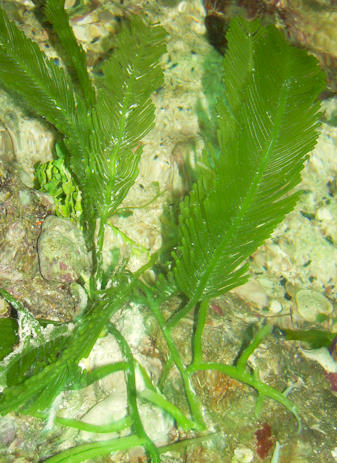
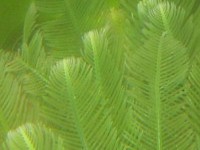
Caulerpa sertulariodes

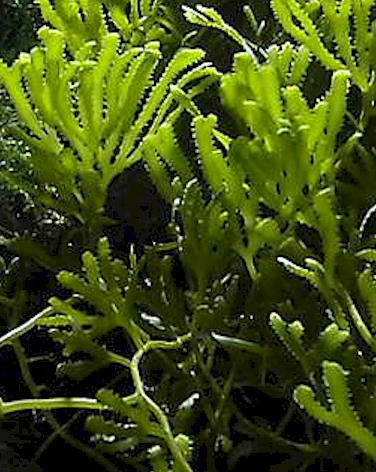
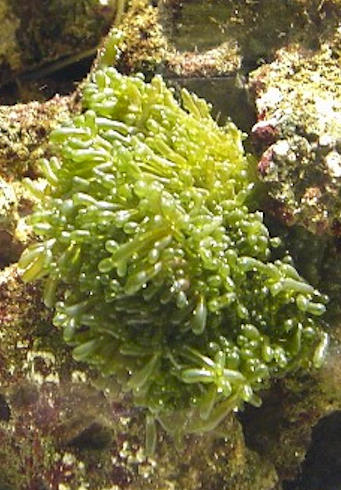
A very popular species of Caulerpa for refugiums and or display in the marine aquarium. It features long, erect, feather shaped blades that form a somewhat rounded tip. The coloration varies, but is typically a light green shade. This species grows very quickly and can be problematic in some reef aquaria, as it can quickly take over the aquascape. It’s palatable to many fish and inverts, so is an excellent choice as a food source because of it’s fast growth. It prefers to grow on rocks and hard surfaces rather than sand, but it’s quite adaptable to grow in almost any environment. It has an interesting habit of climbing up the sides of an aquarium and rocks as a vine would. Sertulariodes is one of only a few species of Caulerpa that typically grows close to shore, but can be found growing sparsely to depths of about 50ft.
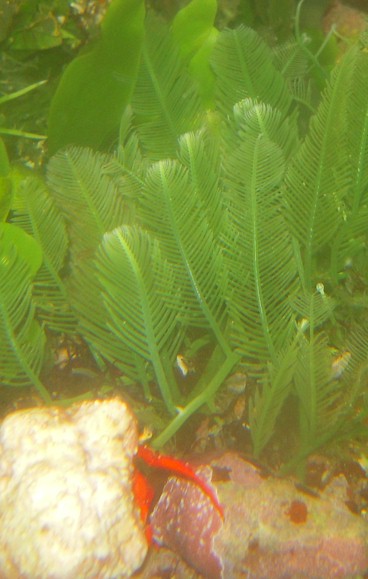
Scientific Name: Caulerpa sertulariodes

Common Name: Feather Algae, Fern Algae

Origin: Gulf of Mexico, Atlantic, Caribbean

Depth Collected: 5 -20 Feet

Maximum Height : 8″

Growth Rate: Fast

Light: Moderate

Temperature: 78-86

Propagation: Fragmentation, sporulation

Difficulty: Easy

Food Value: Palatable to both fish and invertebrates

Nutrient Uptake: Excellent

Flow Rate: Low to Moderate
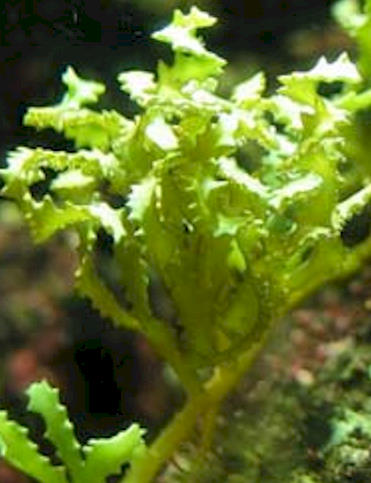
Caulerpa serrulata

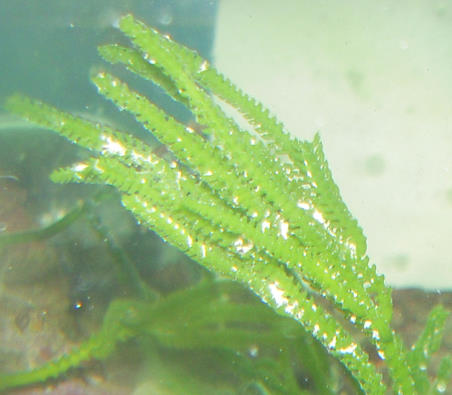
This species of Caulerpa features small, irregular branched uprights with a series of flat serrated blades. It’s a Pacific species that made it’s way into the United States through tropical fish importers. It’s currently much harder to find due to stricter import regulations with Caulerpa species, especially in California. Its native to shallow water habitats, growing on small rocks and coral fragments. This smaller sized specimen is very hardy and will not grow too large in the aquarium. It’s somewhat palatable but it is mostly left alone due to its stiff composition.

Scientific Name: Caulerpa serrulata

Common Name: Sawtooth Algae

Origin: Indo Pacific, Asia

Depth Collected: 1-15 Feet

Maximum Height : 5″

Growth Rate: Moderate

Light: Moderate

Temperature: 78-86

Propagation: Fragmentation, Sporulation

Difficulty: Easy

Food Value: Somewhat Palatable

Nutrient Uptake: Good

Flow Rate: Low to Moderate
Caulerpa cupressoides

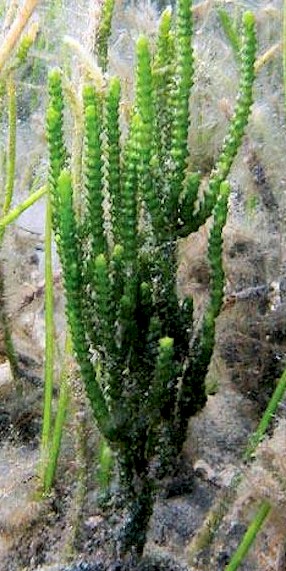
This species of Caulerpa features long, stiff, uprights with finger-like clusters of notched blades attached from a long rhizome. It is typically found growing intertwined with sea grass beds, channels and ledges in shallow water habitats to about 10ft deep. When found in deeper habitats it’s growth is much smaller and stunted. This species of Caulerpa prefers sandy substrate, but will attach to rocks and coral fragments. It is very hardy in the aquarium and is relatively undemanding in its needs. All Caulerpa species should be pruned back to encourage new growth and to prevent die off in the aquarium. It can be safely buried in the sand bed or left to attach on their own as they grow. Not palatable to fish and invertebrates.

Scientific Name: Caulerpa cupressoides

Common Name: Zipper Algae

Origin: Atlantic, Caribbean

Depth Collected: 1-15 Feet

Maximum Height : 8″

Growth Rate: Slow

Light: Moderate to High

Temperature: 74-86

Propagation: Fragmentation, Sporulation

Difficulty: Easy

Food Value: Not Palatable

Nutrient Uptake: Fair

Flow Rate: Moderate

Caulerpa racemosa var. cylindracea

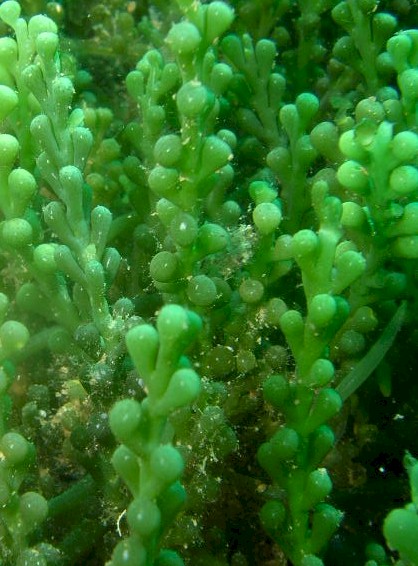
They’re many species of Caulerpa racemosa found worldwide. They can be highly variable in composition, which makes it difficult to properly identify each individual species without inspection of the cell structure under a microscope. This particular species of racemosa features a dark green color with tall branches composed of long clusters of cylindrical shaped fronds. It resembles a bunch of bananas and is very attractive in the marine aquarium. Like most varieties of Caulerpa racemosa, it can quickly outgrow the available nutrients in a tank, so care must be taken to limit the size of each specimen by regular division of the rhizome. This species is not very palatable to most fish and invertebrates, although some algae eating fish will nip at the rhizome structure.

Scientific Name: Caulerpa racemosa var. cylindracea

Common Name: Banana Algae, Grape Caulerpa

Origin: Gulf of Mexico, Caribbean

Depth Collected: 4-25 Feet

Maximum Height : 6″

Growth Rate: Fast

Light: Moderate to High

Temperature: 72-86

Propagation: Fragmentation, Sporulation

Difficulty: Easy

Food Value: Not Very Palatable

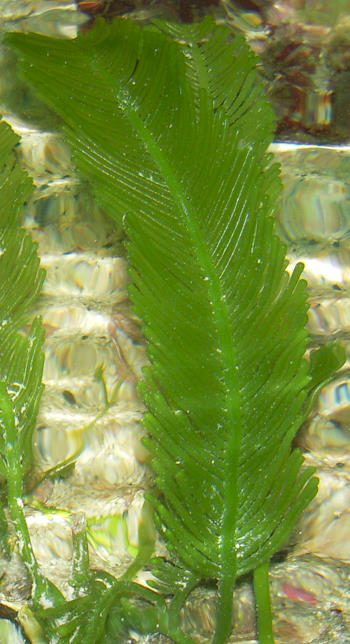
Caulerpa ashmeadii

This species of Caulerpa is a large variety that can reach blade widths of up to 2″ and a height of about 12″. Unlike it’s close relative, Caulerpa sertulariodes, it prefers slightly deeper habitats and often is found on the edges of channels in depths of 20ft or more. It features a thick rhizome, split into individual cylindrical fronds that grows horizontally on the sea floor. Younger specimens are often confused with Sertulariodes, as they are very similar in characteristics and are often sold as “feather algae” in the aquarium trade. Because of its size and it’s fairly slow growth it will not overgrow its environment like other species do. When pruning the large rhizome, pinching the tissue is best so that a minimal amount of chemical is released into the aquarium. Regular division of the rhizome is recommended to promote new growth and to protect the algae from sporulation.

Scientific Name: Caulerpa ashmeadii

Common Name: Giant Feather Algae, Feather Algae

Origin: Gulf of Mexico, Atlantic, Caribbean

Depth Collected: 5-25 Feet

Maximum Height : 14″

Growth Rate: Moderate

Light: Moderate

Temperature: 78-86

Propagation: Fragmentation, Sporulation

Difficulty: Easy

Food Value: Somewhat Palatable

Nutrient Uptake: Good

Flow Rate: Low to Moderate
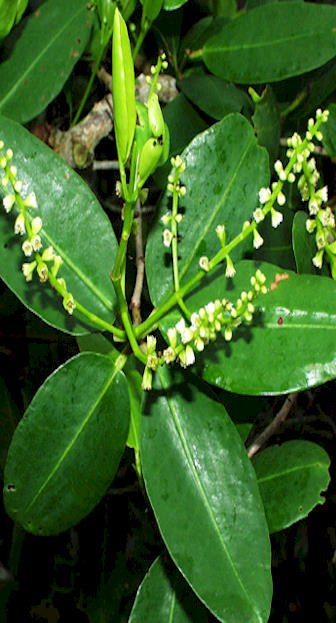
Laguncularia racemosa

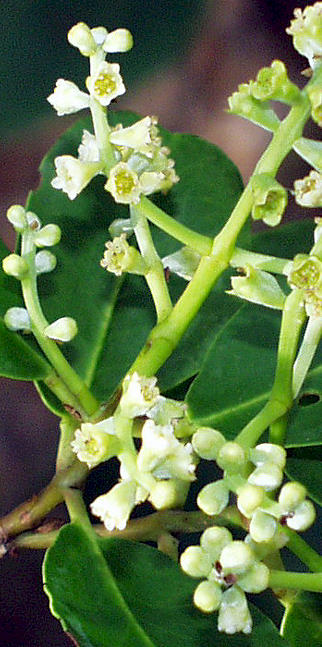
The white mangrove is usually found further inland of the red and black mangroves and is the most cold-sensitive of the mangroves. The white mangrove features a pair of nodular, salt-excreting glands found near the tip of each leaf stalk and a series of blackish glands between the middle vein. The seeds or fruit of the white mangrove are round and the flowers are white. One of the distinguishing characteristics are the rounded leaves that feature a notched tip. Unlike both red & black mangroves, white mangroves lack specialized aerial roots, though under certain conditions may produce a few “peg roots” similar to those of the black mangrove. Flowering is in spring and early summer. Because of the lack of breathing tubes or aerial roots, the white mangrove is difficult to grow in the marine aquarium. Some have had success with simply floating collected seed pods, but the plant normally dies as its roots can not be submersed long term. Its only suited for biotopes that allow for the root system to be partially above the water line.

Scientific Name: Laguncularia racemosa

Common Name: White Mangrove

Origin: Gulf of Mexico, Atlantic, Caribbean

Depth Collected: low tide zone

Maximum Height : 60′

Growth Rate: Slow

Light: High

Temperature: 65-100

Propagation: Rhizomes, Seeds

Difficulty: Advanced

Food Value: None

Nutrient Uptake: Fair once established

Flow Rate: Low

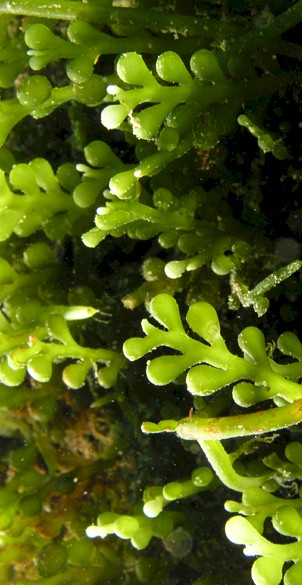
Valonia sp.

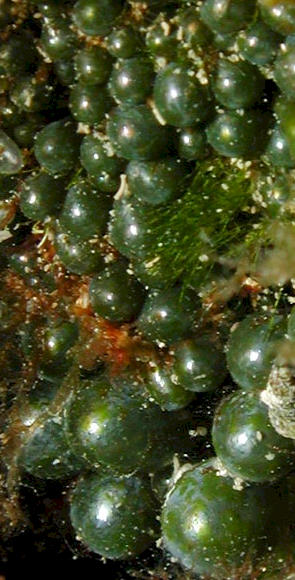
Species of Valonia occur worldwide in tropical waters on reefs as well as shallow water habitats. All species of Valonia feature variable sized, fluid and air filled balls or spheres, in shades of light to dark green.  Studies have shown that several varieties can actually release spores to form a separate, but related species of macro algae known as Derbesia. Species of Valonia are generally regarded as pests in marine and invertebrate aquariums, so much so, that aquarists employ a number of tactics to rid themselves of this highly invasive algae.  In the planted aquarium however, they can be a beautiful and interesting species to care for. It most commonly is introduced to the marine aquarium industry as a resident on imported and cultured live rock.

Scientific Name: Valonia sp.

Common Name: Bubble Algae

Origin: Worldwide Distribution

Depth Collected: 10-50 Feet

Maximum Height : 8″

Growth Rate: Moderate

Light: High

Temperature: 75-84

Propagation: Fragmentation, Sporulation

Difficulty: Easy

Food Value: Not Palatable

Nutrient Uptake: Good

Flow Rate: Moderate to High

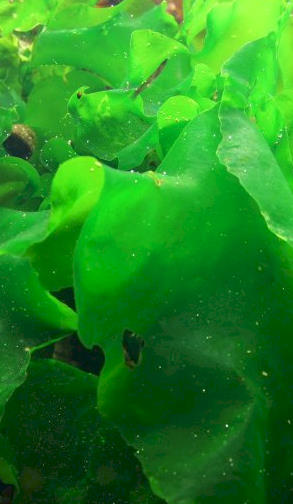
Ulva sp.

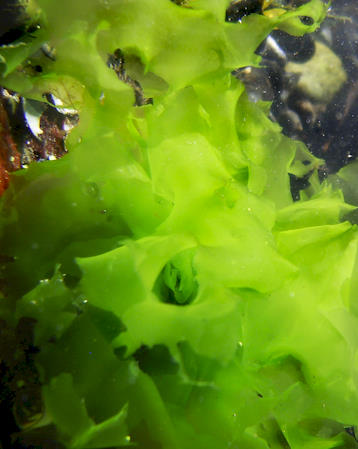
Ulva is common worldwide in a wide variety of species and locations. It lives in both temperate and tropical waters seasonally and prefers water temps of 60-78 degrees. Most are composed of smooth, ruffled disks attached to rocks, shells or hard bottom by a single holdfast. Other forms include strips or tubes protruding from the center of the plant.  A fast grower, it’s use is nearly as popular in the refugium as Chaetomorpha. Not only does it efficiently remove excess nutrients from the aquarium, but it is very palatable to a number of fish and invertebrates. Ulva is also an excellent macro algae for culturing both copepods and amphipods in the aquarium. Although it will attach, typically Ulva is tumbled or allowed to simply float in a refugium. It can be problematic in a refugium if the return pump is not protected, as it can clog up plumbing systems. Very palatable to fish.

Scientific Name: Ulva sp.

Common Name: Sea Lettuce

Origin: Worldwide Distribution

Depth Collected: 1-8 Feet

Maximum Height : 8″ mound

Growth Rate: Fast

Light: Moderate to High

Temperature: 60-78

Propagation: Fragmentation, Sporulation

Difficulty: Easy

Food Value: Very Palatable

Nutrient Uptake: Excellent

Flow Rate: Moderate 

Thalassia testudinum

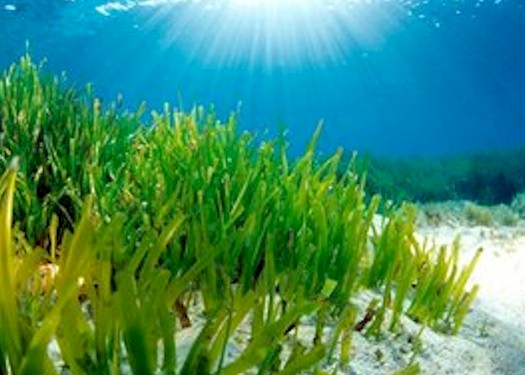
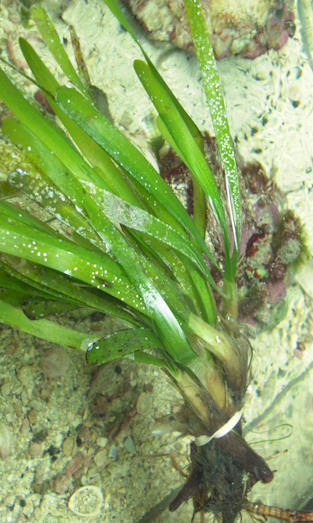
Species of Thalassia are the most abundant marine plant in the Caribbean. A flat bladed, dark green sea grass featuring an extensive root system that securely anchors and protects the plants from tidal surge, storms and ocean currents. The leaves are ribbon-like, about ½ inch wide and often reach heights of up to 14 inches long. Turtle Grass, like most sea grasses, are very adaptable to survive in a wide range of salinities, ranging from 20 ppt. to 40 ppt. It can also survive exposure to air at low tide levels. Once the root system is disturbed or damaged it will not repair itself, which is why it can take a year or more for damaged beds to become restored. In the aquarium it requires a moderate depth of sediment (6-8″ minimum) for its deep rhizome network. The root system spreads by lateral growth of the rhizomes at their ends and is the most common form of reproduction. Sand beds that are rich in organic material are best, but plants can be fertilized by inorganic means such as dry and liquid plant food. 

Scientific Name: Thalassia testudinum

Common Name: Turtle Grass

Origin: Gulf of Mexico, Atlantic, Caribbean

Depth Collected: 4 -80 Feet

Maximum Height : 14″

Growth Rate: Slow

Light: High

Temperature: 78-86

Propagation: Rhizomes, Seeds

Difficulty: Advanced

Food Value: Palatable to some fish

Nutrient Uptake: Good once established

Flow Rate: Moderate to High

Halodule wrightii

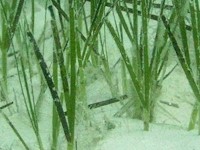
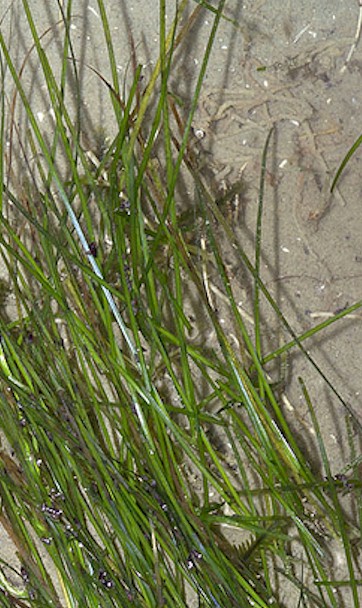
Shoal Grass features thin, flat bladed leaves that resemble terrestrial grass, reaching heights to about 12″. It is an  important sea grass in that it is a pioneer colonizer of disturbed areas where Turtle Grass and Manatee Grass cannot grow. It is often found in waters too shallow or too deep for other grasses to grow and can survive the widest range of salinity of all sea grasses. It can also survive direct exposure to air and tropical sunlight at low tide levels. Its popularity for use in the aquarium is growing, as it can do well in shallower substrates (3″ minimum) because the root system only extends about 4″ into the substrate. Just like other seagrass, the root system spreads by lateral growth of the rhizomes at their ends and is the most common form of reproduction. Sand beds that are rich in organic material are best, but plants can be fertilized by inorganic means such as dry and liquid plant food. As with Turtle Grass, there is evidence of the presence of nitrogen-fixing anaerobic microbes on their roots and rhizomes, which help to supply nitrogen to nearby grass beds. Free floating fragments remain viable for several weeks and can even repopulate sand beds. This characteristic makes it an ideal specimen for the aquarium as it is very hardy and adaptable. Most specimens find their way into the aquarium trade by the collection of “drift fragments” collected after storms and by boaters disturbing grass beds.

Scientific Name: Halodule wrightii

Common Name: Shoal Grass

Origin: Gulf of Mexico, Atlantic, Caribbean

Depth Collected: 1-6  Feet

Maximum Height : 12″

Growth Rate: Moderate

Light: High

Temperature: 65-86 Degrees

Propagation: Rhizomes, Seeds

Difficulty: Advanced

Food Value: Palatable to some fish

Nutrient Uptake: Good once established

Flow Rate: Moderate to High