Halymenia floresia

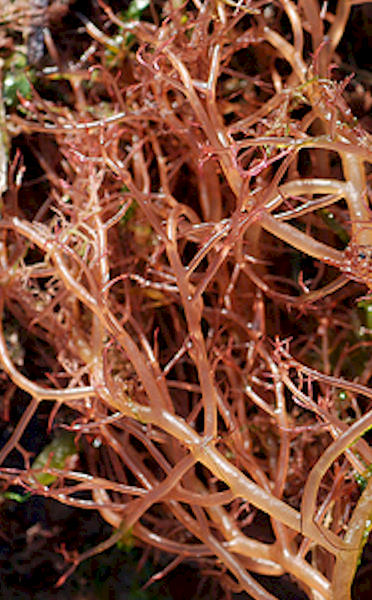
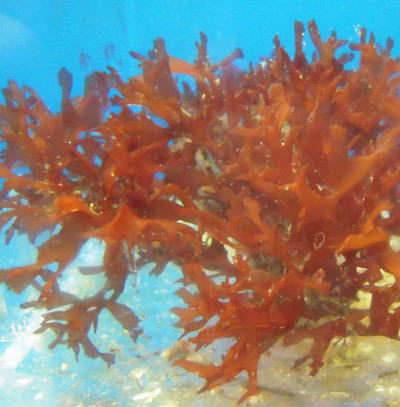
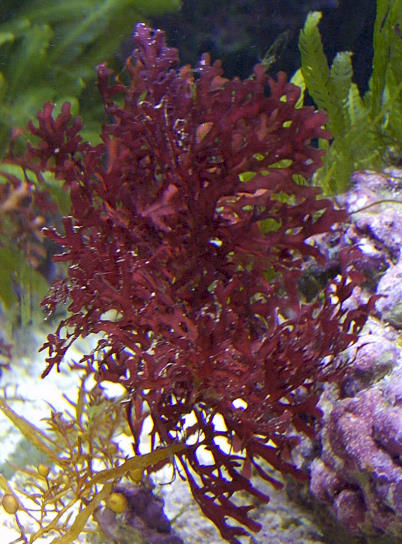
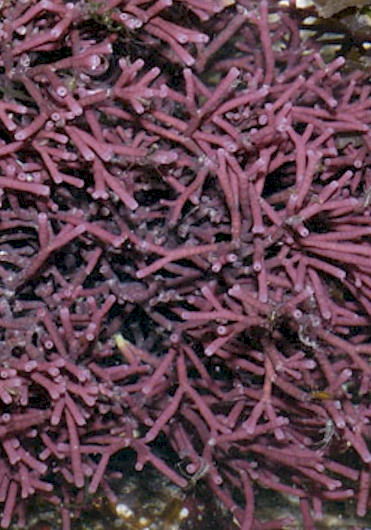
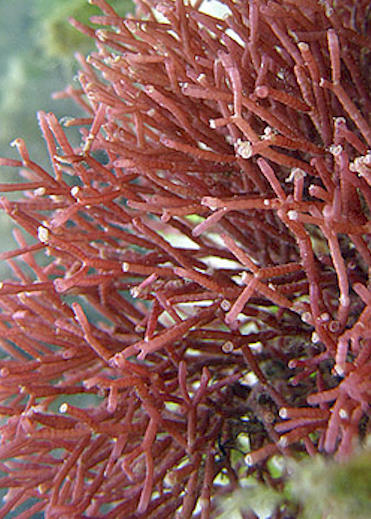
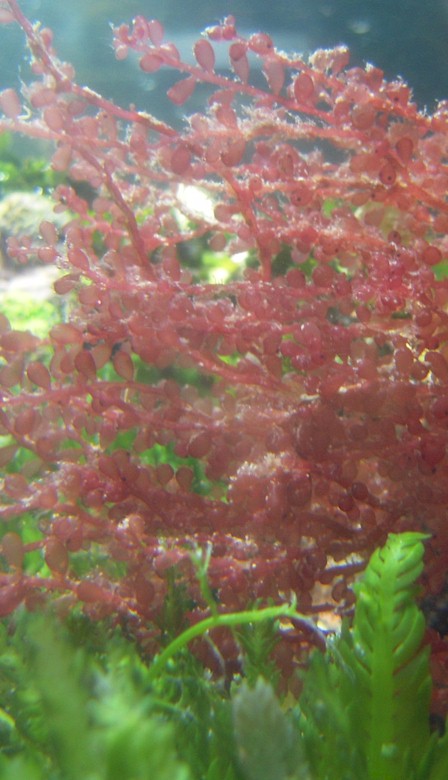
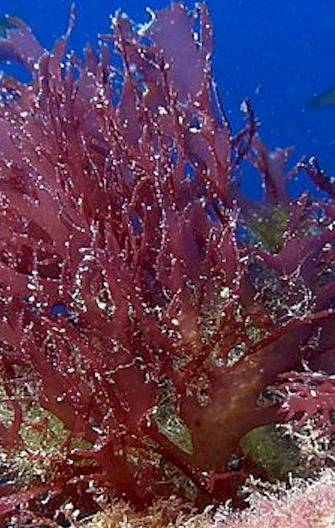
This species features attractive, flattened, flame shaped appendages with a coloration ranging from pink to dark red. Like all species of Halymenia, it’s very thin, gelatinous and smooth in texture and loses it’s form when removed from the water. It’s delicate and can break apart and tear easily when handled or subjected to high flow. It’s sometimes encountered as free floating specimens in seaweed mats, but it naturally grows attached to hard bottom in depths of up to 60ft or so. Single plants can grow very large and reach heights of almost 20″ or more. H. floresia requires a large amount of nutrients to keep successfully in the aquarium and moderate to high flow to maintain its slippery, fleshy blades. In the aquarium it will seldom attach to anything so specimens can be anchored or allowed to tumble free floating. It’s very palatable and is readily eaten by both tangs, angels and other herbivores.
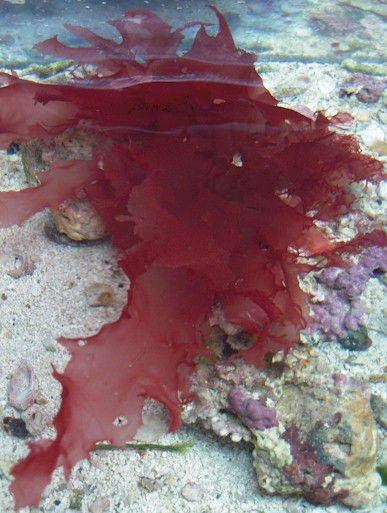
Scientific Name: Halymenia floresia

Common Name: Red Sea Lettuce, Dragons Tongue

Origin: Gulf of Mexico, Caribbean, Tropical Atlantic

Depth Collected: 20-130 feet

Maximum Height: 20″

Growth Rate: Slow

Light: Moderate to Low

Temperature: 78-84

Propagation: Fragmentation, sporulation

Difficulty: Moderate

Food Value: Very palatable

Nutrient Uptake: Good

Flow Rate: Moderate to High
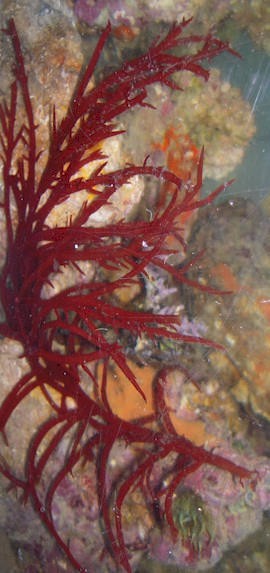
Gracilaria tikvahiae

All species of Gracilaria are highly variable depending on the environment collected, which can make proper identification difficult. G. tikvahiae features a orange to deep red coloration with long, slender, somewhat flattened branches attached by a single holdfast. This species is found in depths of 10ft to about 40ft, attached to hard bottom and rock outcroppings. Species of tikvahiae can also be encountered as free floating specimens, lacking any holdfast, composed of a large circular clump. This particular red algae does very well in the marine aquarium or refugium and is a great food source for fish. It’s growth is slow to moderate depending on the availability of light and nutrients. Most species of Gracilaria will do well in captivity under a variety of conditions as long as there are sufficient nutrients present. Tumbling the algae aids in keeping the tissue in constant suspension with the water for optimum health. This species is very palatable to tangs and angels as well as other herbivores.

Scientific Name: Gracilaria tikvahiae

Common Name: Red Gracilaria

Origin: Gulf of Mexico. Atlantic, Caribbean

Maximum Height : 16″

Growth Rate: Moderate

Light: Moderate to High

Temperature: 78-86

Propagation: Fragmentation, Sporulation

Difficulty: Easy

Food Value: Palatable

Nutrient Uptake: Good

Flow Rate: Moderate


Gracilaria parvisipora

This species of Gracilaria features long, cylindrical, alternating branches that are attached by a single holdfast to rubble, shells and hard bottom habitats. The coloration varies depending on the depth collected and ranges from bright red to yellow or green. Gracilaria parvispora is a very popular species of macro algae used among marine aquarists and cultivated commercially. It’s easily grown under a variety of conditions and provides an excellent food source to many herbivorous fish and invertebrates. It’s typically not as attractive in the aquarium as some other species of Gracilaria, but has enjoyed a long history of use in the refugium and reef aquariums worldwide.

Scientific Name: Gracilaria parvisipora

Common Name: Red Gracilaria

Origin: Gulf of Mexico. Atlantic, Caribbean, S. Pacific

Maximum Height : 14″

Growth Rate: Moderate

Light: Moderate to High

Temperature: 78-86

Propagation: Fragmentation, Sporulation

Difficulty: Easy

Food Value: Very palatable to Fish and Invertebrates

Nutrient Uptake: Good

Flow Rate: Moderate to High
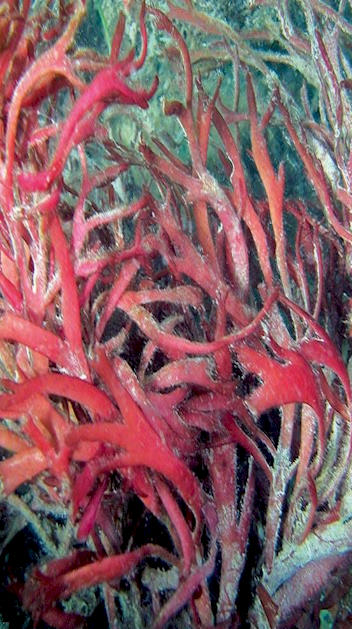
Gracilaria hayi

An attractive species of Gracilaria featuring rigid, lobe shaped branches that form a tight symmetrical bush. It’s lightly calcified so the addition of calcium is recommended. It grows mainly in shallow, protected, high nutrient habitats attached to sponges, shell and rocks. It often hosts other algae species and is frequently covered in colonial tunicates or encrusted with epiphytic bryozoans. The coloration varies between deep crimson red to bright orange depending on the amount of light provided. It’s found attached by a single holdfast or found tumbling in drift algae mats. Overall it’s one of the easiest marine macro algae to keep and will grow well under a variety of conditions. Due to it’s lightly calcified branches this species isn’t known to be very palatable to fish or invertebrates.

Scientific Name: Gracilaria hayi

Common Name: Red Bush, Fire Algae

Origin: Gulf of Mexico, Caribbean, Tropical Atlantic

Maximum Height : 10″

Growth Rate: Medium

Light: Moderate to Low

Temperature: 78-82

Propagation: Fragmentation, sporulation

Difficulty: Easy

Food Value: Not very palatable

Nutrient Uptake: Excellent

Flow Rate: Moderate

Galaxaura sp.

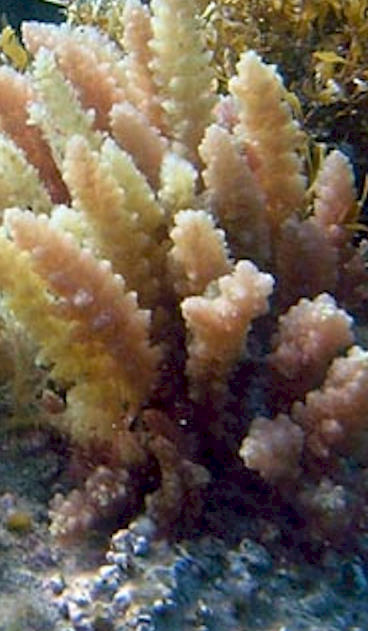
A striking and very beautiful species of red macro algae that features heavily calcified branches attached by a single holdfast to rocks, coral fragments and hard bottom. It has flattened ends on each branch that are usually bright pink or white. Depending on the species, they’re found in a variety of colorations ranging from orange, red to reddish-purple. They’re many species of Galaxaura distributed worldwide with only two species from Florida (Galaxaura rugosa and Tricleocarpa fragilis) entering the aquarium trade. This slow grower is fairly hardy in the aquarium, but needs good water circulation to keep successfully. Like most red macroalgae it will turn a brilliant deep red color in captivity.

Scientific Name: Galaxaura sp.

Common Name: Pom Pom Algae

Origin: Indonesia, Caribbean, S. Pacific

Maximum Height : 8″

Growth Rate: Slow

Light: High

Temperature: 75-82

Propagation: Fragmentation, Sporulation

Difficulty: Moderate

Food Value: Not Palatable

Nutrient Uptake: Fair

Flow Rate: Moderate to High

Chondria Sp.

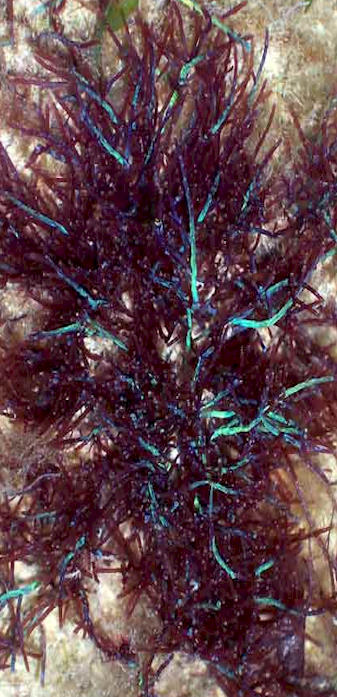
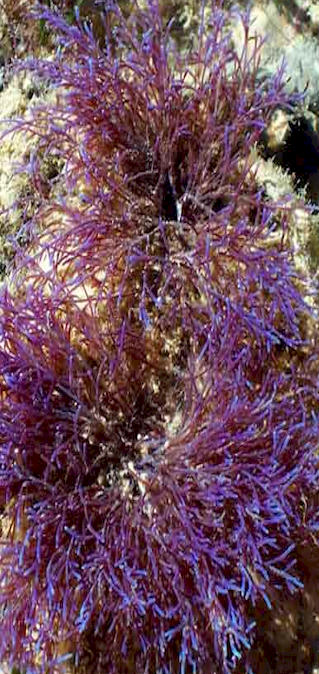
This attractive red algae species is highly variable in both color and composition, depending on the species. It features fine, stiff, irregular shaped branches, that grow in very compact clumps. The coloration ranges from pale red to dull purple with a brilliant blueish-green iridescence. It’s typically found growing in fairly shallow water environments and is considered a turf algae. Like many turf algae, it can become invasive and quickly overgrow rocks and other plants, especially in reef aquaria. In the aquarium, specimens generally remain small, but mature plants can grow to about 12″. It does really well in captivity and is a great addition when allowed to cover portions of live rock. This species is not known to be palatable to fish. 

Scientific Name: Chondria Sp.

Common Name: Chondria

Origin: Gulf of Mexico, Atlantic, Caribbean, S. Pacific

Maximum Height : 12″

Growth Rate: Moderate

Light: Moderate to High

Temperature: 78-86

Propagation: Fragmentation, Sporulation

Difficulty: Easy

Food Value: Not very palatable

Nutrient Uptake: Good

Flow Rate: Moderate to High
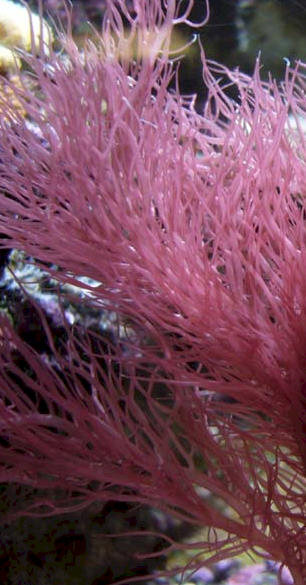
Botryocladia Sp.

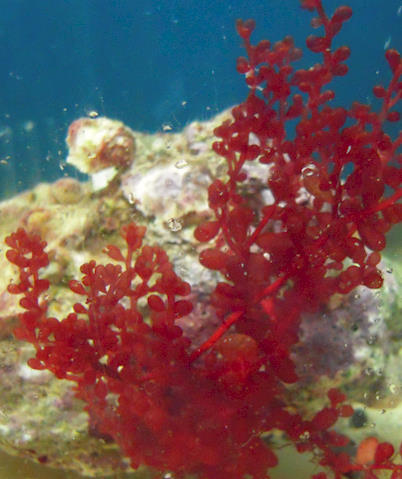
Botryocladia is a truly beautiful specimen that does very well in the marine aquarium. It features stiff, lightly calcified branches with bright red air bladders. It resembles a cluster of grapes and is sometimes referred to as red grape Caulerpa, although it is not a species of Caulerpa at all. Depending on the species, it can grow in rather large clumps attached to rocks and coral fragments in depths of up to 60ft or more. It’s very hardy and will do well in almost any marine aquarium with good water quality and low to medium lighting. There are several varieties available in the aquarium trade, but identification can be difficult as they all have the same basic characteristics.

Scientific Name: Botryocladia Sp.

Common Name: Red Grape, Red Berries

Origin: Gulf of Mexico, Atlantic, Pacific

Depth Collected: 25-65 feet

Maximum Height : 18″

Growth Rate: Slow

Light: Moderate

Temperature: 78-84

Propagation: Fragmentation, sporulation

Difficulty: Easy

Food Value: Very palatable, is readily eaten by Tangs and other herbivores

Nutrient Uptake: Good

Flow Rate: Moderate

Asparagopsis taxiformis

This unique red macro algae is highly variable in coloration depending on the depth collected. Colors range from pale red to pink, with some iridescence. The main branches are cone shaped with soft, fine filaments that are attached firmly to rocks and coral with multiple rhizomes to form dense clusters. It is collected in very shallow, turbulent water and grows rather compactly. This particular algae is rarely seen in the aquarium industry, but shows up occasionally attached to imported live rock from the Pacific. It’s a popular and favorite delicacy in Hawaii, as well as other Pacific islands, and is often imported into the U.S. as a food product. Asparagopsis can be difficult to keep long term in the aquarium and seems to grow in cycles.

Scientific Name: Asparagopsis taxiformis

Common Name: Limu

Origin: Caribbean, S. Pacific

Maximum Height : 6″

Growth Rate: Slow

Light: Moderate to High

Temperature: 72-82

Propagation: Fragmentation, Sporulation

Difficulty: Advanced

Food Value: Palatable

Nutrient Uptake: Good

Flow Rate: Moderate to High