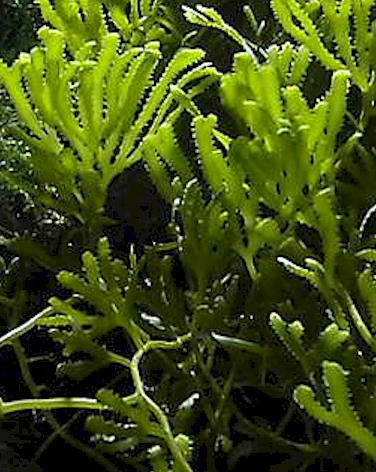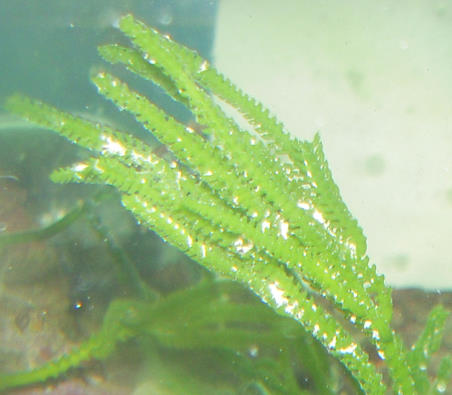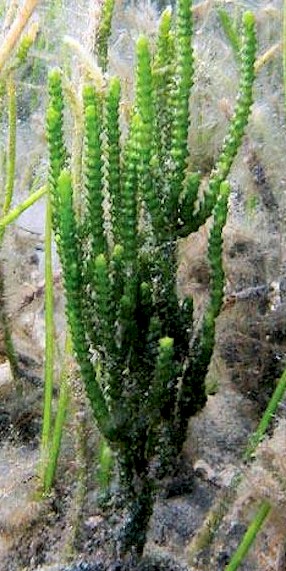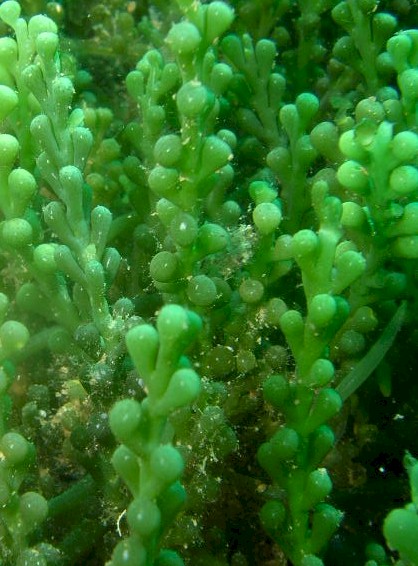
Caulerpa sertulariodes

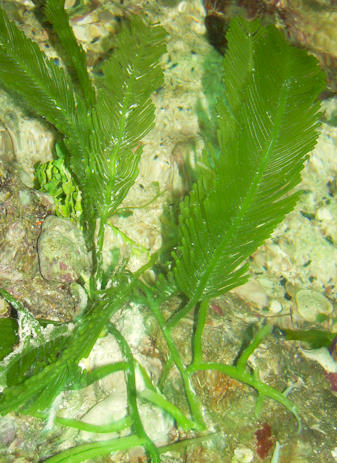
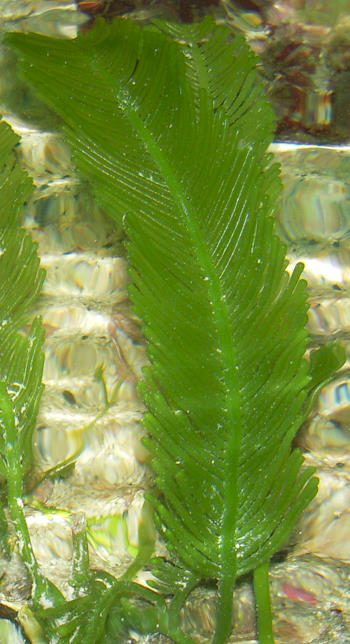
A very popular species of Caulerpa for refugiums and or display in the marine aquarium. It features long, erect, feather shaped blades that form a somewhat rounded tip. The coloration varies, but is typically a light green shade. This species grows very quickly and can be problematic in some reef aquaria, as it can quickly take over the aquascape. It’s palatable to many fish and inverts, so is an excellent choice as a food source because of it’s fast growth. It prefers to grow on rocks and hard surfaces rather than sand, but it’s quite adaptable to grow in almost any environment. It has an interesting habit of climbing up the sides of an aquarium and rocks as a vine would. Sertulariodes is one of only a few species of Caulerpa that typically grows close to shore, but can be found growing sparsely to depths of about 50ft.
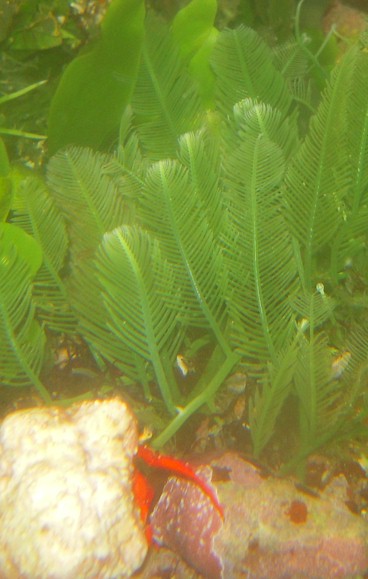
Scientific Name: Caulerpa sertulariodes

Common Name: Feather Algae, Fern Algae

Origin: Gulf of Mexico, Atlantic, Caribbean

Depth Collected: 5 -20 Feet

Maximum Height : 8″

Growth Rate: Fast

Light: Moderate

Temperature: 78-86

Propagation: Fragmentation, sporulation

Difficulty: Easy

Food Value: Palatable to both fish and invertebrates

Nutrient Uptake: Excellent

Flow Rate: Low to Moderate
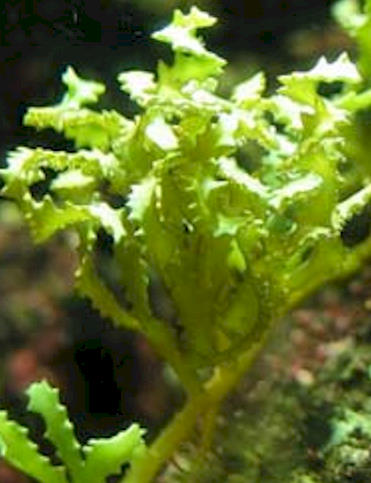
Caulerpa serrulata

This species of Caulerpa features small, irregular branched uprights with a series of flat serrated blades. It’s a Pacific species that made it’s way into the United States through tropical fish importers. It’s currently much harder to find due to stricter import regulations with Caulerpa species, especially in California. Its native to shallow water habitats, growing on small rocks and coral fragments. This smaller sized specimen is very hardy and will not grow too large in the aquarium. It’s somewhat palatable but it is mostly left alone due to its stiff composition.

Scientific Name: Caulerpa serrulata

Common Name: Sawtooth Algae

Origin: Indo Pacific, Asia

Depth Collected: 1-15 Feet

Maximum Height : 5″

Growth Rate: Moderate

Light: Moderate

Temperature: 78-86

Propagation: Fragmentation, Sporulation

Difficulty: Easy

Food Value: Somewhat Palatable

Nutrient Uptake: Good

Flow Rate: Low to Moderate
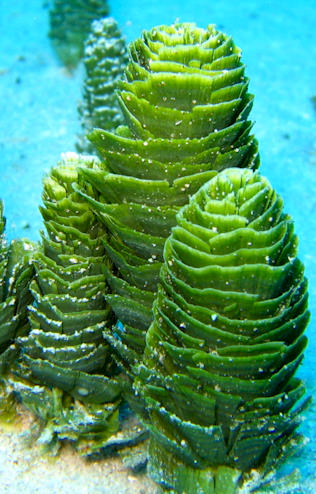
Caulerpa cupressoides

This species of Caulerpa features long, stiff, uprights with finger-like clusters of notched blades attached from a long rhizome. It is typically found growing intertwined with sea grass beds, channels and ledges in shallow water habitats to about 10ft deep. When found in deeper habitats it’s growth is much smaller and stunted. This species of Caulerpa prefers sandy substrate, but will attach to rocks and coral fragments. It is very hardy in the aquarium and is relatively undemanding in its needs. All Caulerpa species should be pruned back to encourage new growth and to prevent die off in the aquarium. It can be safely buried in the sand bed or left to attach on their own as they grow. Not palatable to fish and invertebrates.

Scientific Name: Caulerpa cupressoides

Common Name: Zipper Algae

Origin: Atlantic, Caribbean

Depth Collected: 1-15 Feet

Maximum Height : 8″

Growth Rate: Slow

Light: Moderate to High

Temperature: 74-86

Propagation: Fragmentation, Sporulation

Difficulty: Easy

Food Value: Not Palatable

Nutrient Uptake: Fair

Flow Rate: Moderate

Caulerpa racemosa var. cylindracea

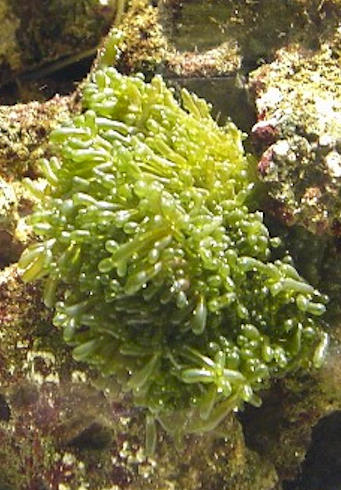
They’re many species of Caulerpa racemosa found worldwide. They can be highly variable in composition, which makes it difficult to properly identify each individual species without inspection of the cell structure under a microscope. This particular species of racemosa features a dark green color with tall branches composed of long clusters of cylindrical shaped fronds. It resembles a bunch of bananas and is very attractive in the marine aquarium. Like most varieties of Caulerpa racemosa, it can quickly outgrow the available nutrients in a tank, so care must be taken to limit the size of each specimen by regular division of the rhizome. This species is not very palatable to most fish and invertebrates, although some algae eating fish will nip at the rhizome structure.

Scientific Name: Caulerpa racemosa var. cylindracea

Common Name: Banana Algae, Grape Caulerpa

Origin: Gulf of Mexico, Caribbean

Depth Collected: 4-25 Feet

Maximum Height : 6″

Growth Rate: Fast

Light: Moderate to High

Temperature: 72-86

Propagation: Fragmentation, Sporulation

Difficulty: Easy

Food Value: Not Very Palatable

Caulerpa ashmeadii

This species of Caulerpa is a large variety that can reach blade widths of up to 2″ and a height of about 12″. Unlike it’s close relative, Caulerpa sertulariodes, it prefers slightly deeper habitats and often is found on the edges of channels in depths of 20ft or more. It features a thick rhizome, split into individual cylindrical fronds that grows horizontally on the sea floor. Younger specimens are often confused with Sertulariodes, as they are very similar in characteristics and are often sold as “feather algae” in the aquarium trade. Because of its size and it’s fairly slow growth it will not overgrow its environment like other species do. When pruning the large rhizome, pinching the tissue is best so that a minimal amount of chemical is released into the aquarium. Regular division of the rhizome is recommended to promote new growth and to protect the algae from sporulation.

Scientific Name: Caulerpa ashmeadii

Common Name: Giant Feather Algae, Feather Algae

Origin: Gulf of Mexico, Atlantic, Caribbean

Depth Collected: 5-25 Feet

Maximum Height : 14″

Growth Rate: Moderate

Light: Moderate

Temperature: 78-86

Propagation: Fragmentation, Sporulation

Difficulty: Easy

Food Value: Somewhat Palatable

Nutrient Uptake: Good

Flow Rate: Low to Moderate
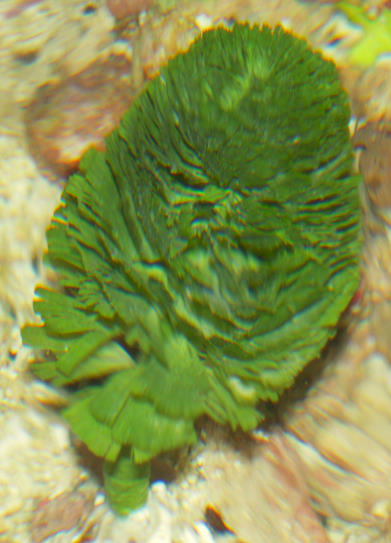
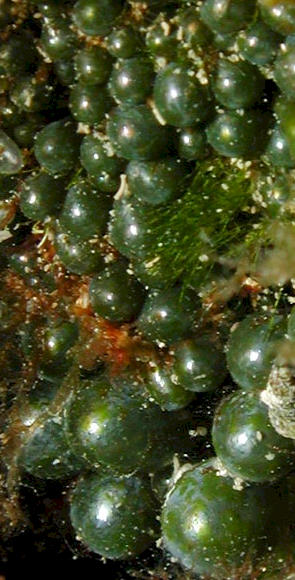
Valonia sp.

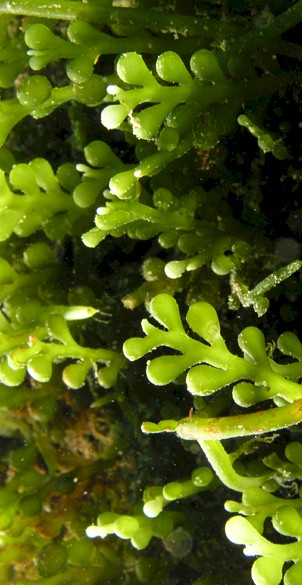
Species of Valonia occur worldwide in tropical waters on reefs as well as shallow water habitats. All species of Valonia feature variable sized, fluid and air filled balls or spheres, in shades of light to dark green.  Studies have shown that several varieties can actually release spores to form a separate, but related species of macro algae known as Derbesia. Species of Valonia are generally regarded as pests in marine and invertebrate aquariums, so much so, that aquarists employ a number of tactics to rid themselves of this highly invasive algae.  In the planted aquarium however, they can be a beautiful and interesting species to care for. It most commonly is introduced to the marine aquarium industry as a resident on imported and cultured live rock.

Scientific Name: Valonia sp.

Common Name: Bubble Algae

Origin: Worldwide Distribution

Depth Collected: 10-50 Feet

Maximum Height : 8″

Growth Rate: Moderate

Light: High

Temperature: 75-84

Propagation: Fragmentation, Sporulation

Difficulty: Easy

Food Value: Not Palatable

Nutrient Uptake: Good

Flow Rate: Moderate to High

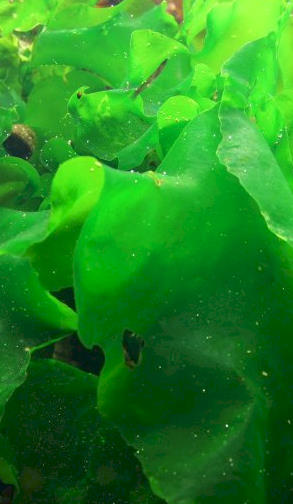
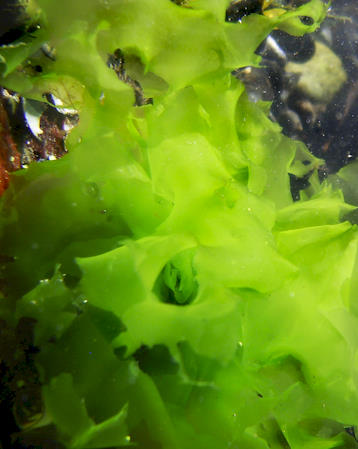
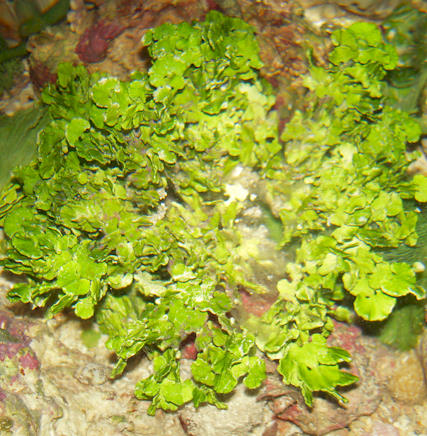
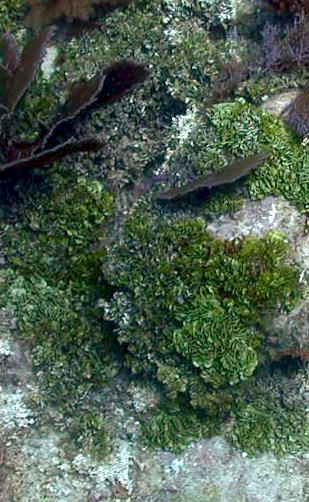
Ulva sp.

Ulva is common worldwide in a wide variety of species and locations. It lives in both temperate and tropical waters seasonally and prefers water temps of 60-78 degrees. Most are composed of smooth, ruffled disks attached to rocks, shells or hard bottom by a single holdfast. Other forms include strips or tubes protruding from the center of the plant.  A fast grower, it’s use is nearly as popular in the refugium as Chaetomorpha. Not only does it efficiently remove excess nutrients from the aquarium, but it is very palatable to a number of fish and invertebrates. Ulva is also an excellent macro algae for culturing both copepods and amphipods in the aquarium. Although it will attach, typically Ulva is tumbled or allowed to simply float in a refugium. It can be problematic in a refugium if the return pump is not protected, as it can clog up plumbing systems. Very palatable to fish.

Scientific Name: Ulva sp.

Common Name: Sea Lettuce

Origin: Worldwide Distribution

Depth Collected: 1-8 Feet

Maximum Height : 8″ mound

Growth Rate: Fast

Light: Moderate to High

Temperature: 60-78

Propagation: Fragmentation, Sporulation

Difficulty: Easy

Food Value: Very Palatable

Nutrient Uptake: Excellent

Flow Rate: Moderate 

Rhipocephalus phoenix

A very beautiful calcified algae that’s spherical in shape, resembling a pinecone or christmas tree. It’s native to the reef flat, it grows in sandy substrate among sea grass beds and Halimeda forests. There are several distinct species, including brevifolius and longifolius that are similar in shape and characteristics. Its root-like structure is a large bulb with a series of rhizoids that anchor it to substrate, and sometimes rocks. Mature plants only reach a height of about 6″. Like most calcareous stem plants, it needs a deep sand bed of 4″ or more to grow in the aquarium. Calcium supplementation is needed. Not palatable to fish or invertebrates.

Scientific Name: Rhipocephalus phoenix

Common Name: Pinecone Algae

Origin: Atlantic, Caribbean

Depth Collected: 3-50 Feet

Maximum Height : 6″

Growth Rate: Moderate

Light: Moderate to High

Temperature: 76-86

Propagation: Fragmentation, Sporulation

Difficulty: Easy

Food Value: Not Palatable

Nutrient Uptake: Fair

Flow Rate: Moderate

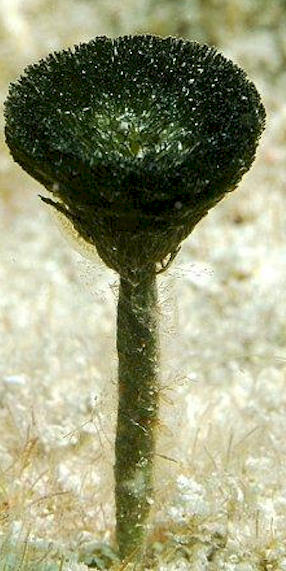
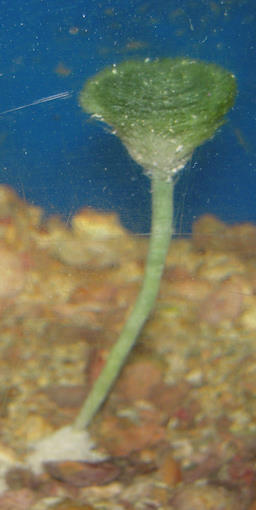
Penicillus pyriformis

A unique species of Penicillus that features a tall thin stem with fine tapered filaments and a flattened top. This particular species can grow much taller than other species of Penicillus, up to about 8″ . It’s abundant on the reef flat and among sea grass beds.  Its root-like structure is a large bulb with a series of rhizoids that anchor it to substrate and sometimes rocks. It occurs in shallow calm protected water, but is also found as deep as 100 ft. In the aquarium the mature plant often dies to produce new plants at its base. Like most calcareous stem plants, it needs a deep sand bed of 4″ or more to grow in the aquarium. Calcium supplementation is needed. Not palatable to fish or inverts.

Scientific Name: Penicillus pyriformis

Common Name: Shaving Brush

Origin: Atlantic, Caribbean

Depth Collected: 1-30 Feet

Maximum Height : 8″

Growth Rate: Moderate

Light: Moderate to High

Temperature: 76-86

Propagation: Fragmentation, Sporulation

Difficulty: Easy

Food Value: Not Palatable

Nutrient Uptake: Fair

Flow Rate: Low to Moderate
Halimeda opuntia

An abundant, heavily calcified species of Halimeda that’s a major producer of carbonate sand throughout the Caribbean. It features tight segments of calcified discs that form rather large mounds with several holdfasts anchoring each colony to rocks, sand and hard bottom. It’s abundant in sea grass beds and the edges of channels mixed with other calcareous algae. In the aquarium it requires large amounts of calcium supplementation to grow, as it is very dense in composition. Given the right conditions for growth, it can be used as a ground cover in large marine aquariums for a beautiful effect. This species is readily available and does very well in the aquarium. Not palatable to fish.

Scientific Name: Halimeda opuntia

Common Name: Unknown

Origin: Atlantic, Caribbean, Gulf of Mexico

Depth Collected: 4-70 Feet

Maximum Height : 10″

Growth Rate: Moderate

Light: Moderate to High

Temperature: 76-86

Propagation: Fragmentation, Sporulation

Difficulty: Easy

Food Value: Not Palatable

Nutrient Uptake: Fair

Flow Rate: Moderate