Enteromorpha Sp.

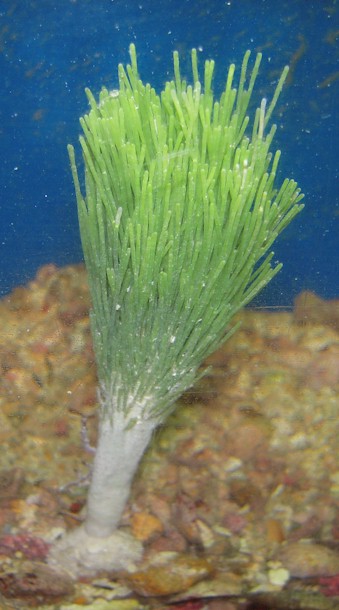
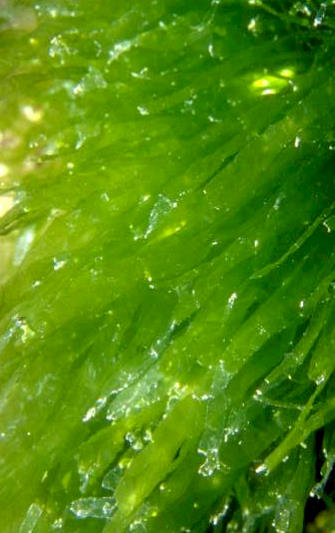
A distinctive green algae that is in the family Ulvales. It’s both a temperate and tropical species, abundant in different forms worldwide. This particular algae features long, slippery tubes or fingers rising from the center of the plant attached by a single holdfast. The Latin term “Enteromorpha” literally means intestine-shaped. It grows in large clumps at the low tide zone on mangrove roots and coarse substrate. It tolerates a wide range of salinities from 17 ppt. to 40 ppt. and is often found at the base of rivers and brackish water estuaries. Like other species of Ulva, it prefers cooler water temperatures in the aquarium and will not do well in temps over 80 degrees. Like other varieties, its very palatable to fish.
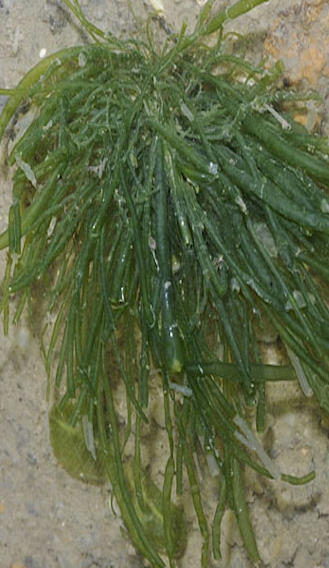
Scientific Name: Enteromorpha sp.

Common Name: Tube Algae

Origin: Worldwide Distribution

Depth Collected: 1-15 Feet

Maximum Height : 10″

Growth Rate: Fast

Light: Moderate to High

Temperature: 60-78

Propagation: Fragmentation, Sporulation

Difficulty: Easy

Food Value: Very Palatable

Nutrient Uptake: Excellent

Flow Rate: Low to Moderate 
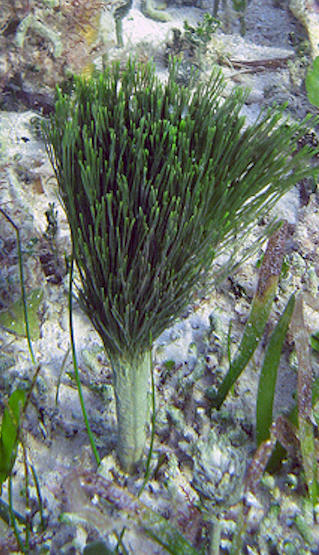
Penicillus dumetosus

This beautiful species of Penicillus is very similar in appearance to P. capitatus, but it’s more heavily calcified and features a short stem, with coarse bristle-like filaments. These particular plants grow much larger than other species of Penicillus, up to 8″ tall. A distinct characteristic of this calcareous algae is that the top is more tapered and flat like a shaving brush which is the common name for this algae. It’s abundant on the reef flat and among sea grass beds in sandy substrate.  It’s root-like structure is a large bulb with a series of rhizoids that anchor it to substrate and sometimes hardbottom. It occurs in shallow calm protected water to depths of 40 ft. In the aquarium the mature plant often dies to produce new plants at it’s base. Like most calcareous stem plants, it needs a deep sand bed of 4″ or more to grow in the aquarium. Calcium supplementation is needed. Not palatable to fish or invertebrates.

Scientific Name: Penicillus dumetosus

Common Name: Mermaid’s Shaving Brush

Origin: Atlantic, Caribbean

Depth Collected: 1-30 Feet

Maximum Height : 8″

Growth Rate: Moderate

Light: Moderate to High

Temperature: 76-86

Propagation: Fragmentation, Sporulation

Difficulty: Easy

Food Value: Not Palatable

Nutrient Uptake: Fair

Flow Rate: Low to Moderate

Halimeda discoidea

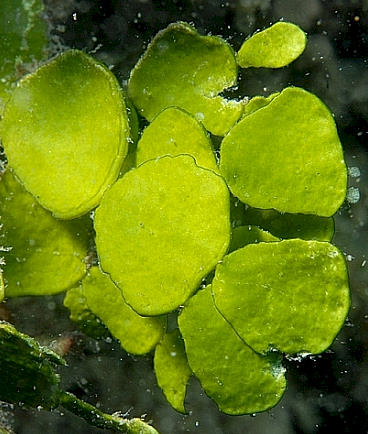
A heavily calcified algae that’s abundant in both shallow and deep water habitats to depths of 100 feet or more. It features large, calcified segments with irregular disc shaped formations. It has the largest individual segments of all Halimeda species. Discoidea has a single holdfast that typically attaches to rocks, shells and hard bottom. Unlike other species of Halimeda, it grows exclusively on hard surfaces and not in sand substrate. This particular species is most often associated with collected and aqua cultured live rock. Like all species of calcareous algae it needs regular calcium supplementation for growth in the aquarium. It does not grow as quickly in the aquarium as other varieties, but is very hardy and attractive.

Scientific Name: Halimeda discoidea

Common Name: Money Plant

Origin: Atlantic, Caribbean, Gulf of Mexico

Depth Collected: 3-100 Feet

Maximum Height : 10″

Growth Rate: Moderate

Light: Moderate to High

Temperature: 76-86

Propagation: Fragmentation, Sporulation

Difficulty: Easy

Food Value: Not Very Palatable

Nutrient Uptake: Fair

Flow Rate: Moderate

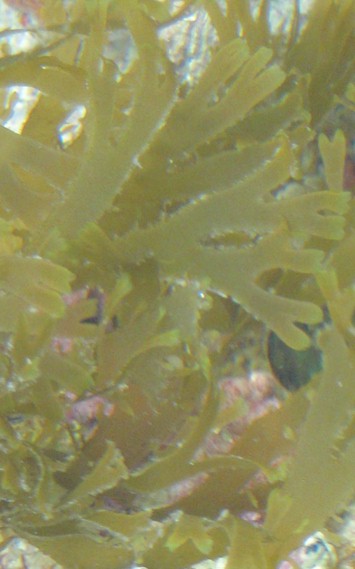
Dictoya Sp.

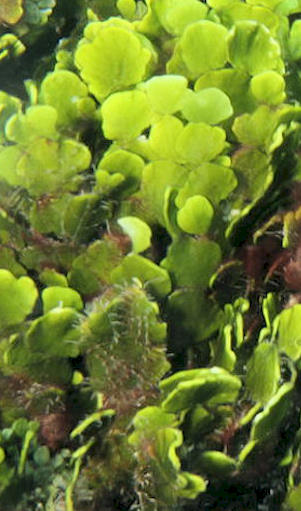
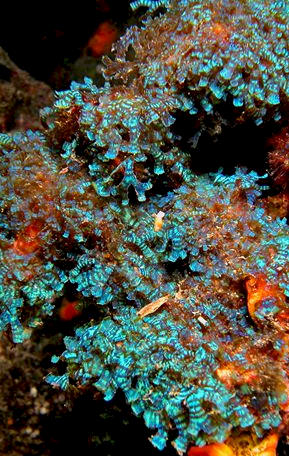
Species of the brown algae Dictoya are highly variable in size, shape and coloration. Some feature a brilliant blue iridescence, while others are more olive brown, such as Dictoya cervicornis. (pictured below) They’re fast growers that are abundant in the shallow reef flats as well as deeper coral reefs. The blades are flat and thin and often form entangled clumps attached to rocks, shells and hard bottom habitat. All varieties are very delicate, tear easily and can often clog pumps and filters. When introduced to the aquarium, many species are highly invasive and can be a nuisance, especially in reef aquaria.

Scientific Name: Dictoya Sp.

Common Name: Iridescent Algae

Origin: Worldwide Distribution

Depth Collected: 3 – 50 feet

Maximum Height : 12″

Growth Rate: Moderate

Light: Moderate to High

Temperature: 72-86

Propagation: Fragmentation, Sporulation

Difficulty: Moderate

Food Value: Somewhat Palatable

Nutrient Uptake: Good

Flow Rate: Moderate to High

Online Resources

Reef Central – An online forum with some good information about marine plants and sea grass. http://www.reefcentral.com/forums/forumdisplay.php?f=176 
Algaebase – a database of information on algae that includes terrestrial, marine and freshwater organisms. http://www.algaebase.org/ 
Seahorse.org – Information on keeping seahorses as well as setting up macro algae dominated aquaria. http://www.seahorse.org/ 
Wet Web Media – a website offering expert advice on marine aquariums including some information on algae species in the aquarium. http://www.wetwebmedia.com/ 
Slipping into Sea Grasses – Making the case for aquariums going green, author Scott Fellman. http://reefbuilders.com/2010/01/23/slipping-into-seagrasses-making-the-case-for-aquariums-going-green/ 
Beautiful Sea Grasses – Keeping true flowering plants in the aquarium, author Anthony Calfo. http://www.reefland.com/articles/rho/beautiful-seagrasses-keeping-true-flowering-plants-in-your-marine-aquarium 
Best Plants and Algae for Refugia, author Anthony Calfo. http://www.reefland.com/articles/rho/best-plants-and-algae-for-refugia 
Mangroves For The Marine Aquarium, author Anthony Calfo. http://reefkeeping.com/issues/2004-12/ac/feature/index.php 
Beyond The Refugium – Seagrass Aquaria, author Sarah Lardizabal. http://reefkeeping.com/issues/2006-04/sl/index.php 
Beyond The Refugium – A Macroalgae Primer, author Sarah Lardizabal. http://www.reefkeeping.com/issues/2007-01/sl/index.php 
The Genus Halophila – Stars Paddles and Oars For The Marine Aquarium, Sarah Lardizabal. http://www.wetwebmedia.com/ca/volume_3/cav3i3/seagrasses/seagrasses.htm 

Glossary

AEROBIC – requiring oxygen
ALGA –  a plant that is photosynthetic and reproduces by releasing spores.
ALKALINITY – the buffering ability of seawater
ANAEROBIC –  needing no oxygen to survive
AQUACULTURE –  the farming of freshwater and saltwater organisms
ARAGONITE –  a mineral made of mostly calcium carbonate
AQUASCAPING –  the artful arranging of plants, substrate and rocks in an aquarium
BARRIER REEF –  a reef that is separated from land in a shallow area
BIOMASS – total amount of material in a single organism
BLADE –  the leaf like structure on macro algae.
BLADDER –  the float on species such as Sargassum and Botryocladia that allow algae to stand upright.
BRANCH LETS –  small projections from the main branch
CALCIFIED –  having calcium carbonate deposits within or on the plant
CLASS –  a group of related organisms
COLONY –  an organism made up of connected individuals
CORALLINE ALGAE –  a calcareous algae that encrusts
CYSTOCARP –  a reproductive formation on female Rhodophyta
DENITRIFICATION –  the process of converting nitrate to nitrogen gas
DETRITUS –  the build up of sediment and organic material 
DIATOMS –  a micro algae, rich in silica, that grows as a film
DOSING –  adding chemicals or elements in small quantities
ECOSYSTEM –  the combined physical and biological components of an environment
ENVIRONMENT –  the combined physical, chemical and biological surroundings
EPIPHYTE –  an organism that lives on plant material but does not prey on it
FAMILY –  a group of related organisms
FILAMENTS –  a slender row of plant cells
FROND – the blade or leaf of macro algae
GENUS –  a group of multiple related organisms
HABITAT –  the environment where an organism grows
HOLDFAST –  a root like structure that algae posses to attach themselves
KELVIN –  a measurement of the color temperature of light
LAGOON –  a protected area behind the reef
LIVE ROCK –  harvested or cultured rock from the ocean that contains organisms and bacteria 
MACRO ALGAE –  large multi-celled algae
MICRO ALGAE  – small single celled algae
NUTRIENT –  a chemical or element required for growth
OOLITIC –  a very fine form of aragonite sand
PHOTOSYNTHESIS –  the ability to convert sunlight into food
PROLIFERATE –  the formation of new frond on an older part of the plant
REFUGIUM –  a separate appendage to an aquarium that provides sanctuary for organisms
RHIZOID –  the root like structure of macro algae
RHIZOME –  the horizontal runner or stem of macro algae
SPECTRUM –  the colors in visible light when separated using a prism
SPORE –  a reproductive structure that forms new organisms.
SPORULATION –  the release of reproductive spores into the water to form new organisms
STOLON –  the stem connecting individual fronds
UPRIGHT –  the vertical structural branch of macro algae 

References

Guiry, M.D. & Guiry, G.M. 2010. AlgaeBase. World-wide electronic publication, National University of Ireland, Galway. www.algaebase.org 
Delbeek, J.C., & Julian Sprung, 1994. The Reef Aquarium, Volume 1, Ricordea Publishing, Coconut Grove, Fl
Matthew J. Dring 1982. The Biology of Marine Plants. Edward Arnold Publishers, Bedford Square, London.
Diane S. Littler, Mark M. Littler & Dennis Hanisak 2008. Submersed Plants of The Indian River Lagoon, A Floristic Inventory & Field Guide. Offshore Graphics, Inc
Littler, D.S., M.M. Littler. 2003. South Pacific Reef Plants. OffShore Graphics, Inc. Washington, DC.
Diane S. Littler, Mark M. Littler, Katina E Bucher, and James N. Norris 1989. Marine Plants of The Caribbean, A field guide from Florida to Brazil. Smithsonian Institution Press, Washington, D.C.
Lobban, C.S. & M.J. Wynne ed. 1981. The Biology of Seaweeds. University of California Press. Berkeley, CA.
Hogarth, Peter J. (1999). The Biology of Mangroves Oxford University Press, Oxford.
National Oceanic and Atmospheric Administration / Department of Commerce, NOAA Photo Library, Silver Spring, MD 20910 www.photolib.noaa.gov 
Calumpong, H. P. & Menez, E. G., 1997. Field Guide to the Common Mangroves, Sea grasses and Algae of the Philippines. Bookmark, Inc., the Philippines. 197 pp.

Waycott, Michelle (et. al). 2004. A Guide to Tropical Sea grasses of the Indo-West Pacific. 2004. James Cook University. 72 pp.

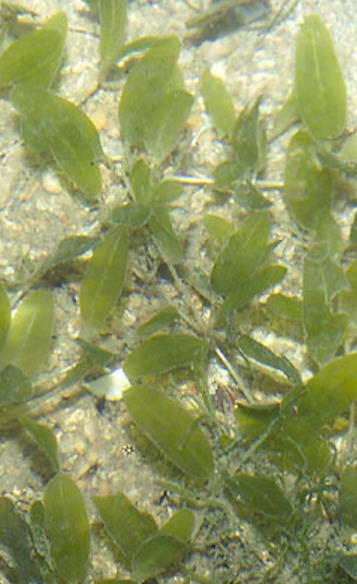
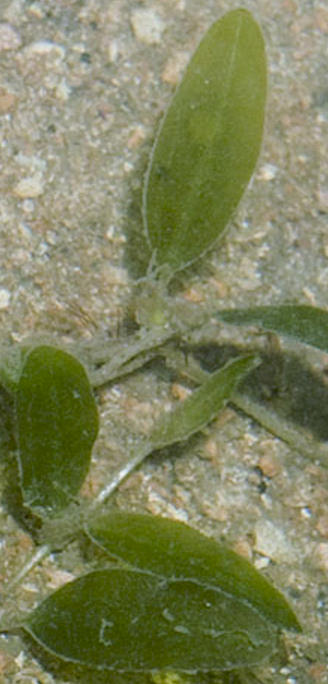
Halophila decipiens

H. decipiens features small, oval shaped leaves, with a white vein down the middle with 6-8 cross veins per blade. Individual plants grow to just 1″ wide by about 3″ tall. It grows attached to a single rhizome in 4-6″ of sediment. It is abundant in calm protected water, where it often forms dense meadows in substrate rich in organic matter. It is typically found at shallow depths, but has been reported in water 280 feet deep in some locations. This species has recently become popular for use in the aquarium and is becoming more available due to the propagation efforts of aquarists within in the United States. H. decipiens is only native to a select area in the state of Florida, mostly the Indian River Lagoon. It is highly protected, so collected plants must be found free floating as drift specimens. Like other varieties of Halophila, it is relatively undemanding in the aquarium, but needs moderate lighting and an organic substrate to grow. Because it can grow very deep, it can often do well in refugiums with high levels of organic nutrients and low light. Not palatable to fish.

Scientific Name: Halophila decipiens

Common Name: Oar Grass

Origin: Gulf of Mexico, Atlantic, Caribbean, S.Pacific

Depth Collected: 10-100 Feet

Maximum Height : 4″

Growth Rate: Slow

Light: Moderate

Temperature: 72-86

Propagation: Rhizomes, Seeds

Difficulty: Moderate

Food Value: Not Palatable 

Nutrient Uptake: Good once established

Flow Rate: Moderate to High

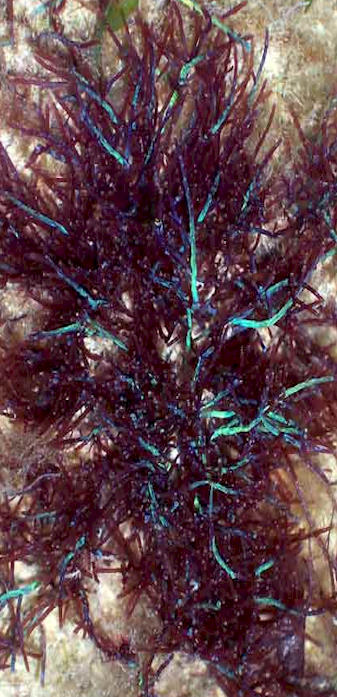
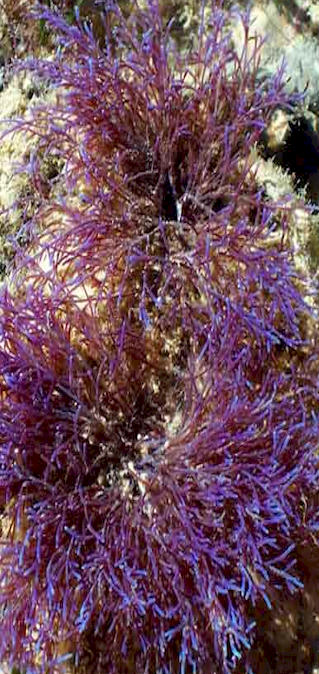
Chondria Sp.

This attractive red algae species is highly variable in both color and composition, depending on the species. It features fine, stiff, irregular shaped branches, that grow in very compact clumps. The coloration ranges from pale red to dull purple with a brilliant blueish-green iridescence. It’s typically found growing in fairly shallow water environments and is considered a turf algae. Like many turf algae, it can become invasive and quickly overgrow rocks and other plants, especially in reef aquaria. In the aquarium, specimens generally remain small, but mature plants can grow to about 12″. It does really well in captivity and is a great addition when allowed to cover portions of live rock. This species is not known to be palatable to fish. 

Scientific Name: Chondria Sp.

Common Name: Chondria

Origin: Gulf of Mexico, Atlantic, Caribbean, S. Pacific

Maximum Height : 12″

Growth Rate: Moderate

Light: Moderate to High

Temperature: 78-86

Propagation: Fragmentation, Sporulation

Difficulty: Easy

Food Value: Not very palatable

Nutrient Uptake: Good

Flow Rate: Moderate to High

Botryocladia Sp.

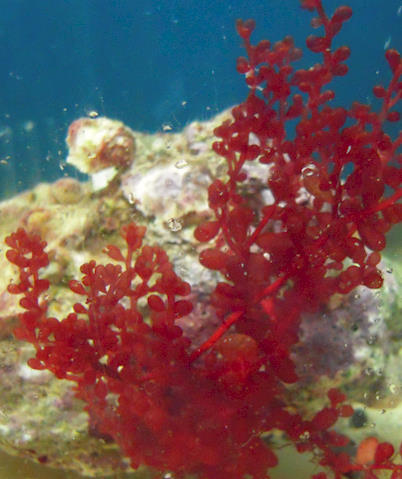
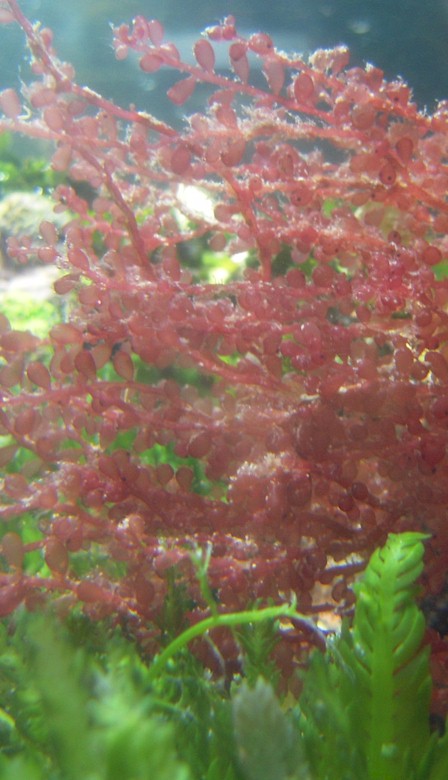
Botryocladia is a truly beautiful specimen that does very well in the marine aquarium. It features stiff, lightly calcified branches with bright red air bladders. It resembles a cluster of grapes and is sometimes referred to as red grape Caulerpa, although it is not a species of Caulerpa at all. Depending on the species, it can grow in rather large clumps attached to rocks and coral fragments in depths of up to 60ft or more. It’s very hardy and will do well in almost any marine aquarium with good water quality and low to medium lighting. There are several varieties available in the aquarium trade, but identification can be difficult as they all have the same basic characteristics.

Scientific Name: Botryocladia Sp.

Common Name: Red Grape, Red Berries

Origin: Gulf of Mexico, Atlantic, Pacific

Depth Collected: 25-65 feet

Maximum Height : 18″

Growth Rate: Slow

Light: Moderate

Temperature: 78-84

Propagation: Fragmentation, sporulation

Difficulty: Easy

Food Value: Very palatable, is readily eaten by Tangs and other herbivores

Nutrient Uptake: Good

Flow Rate: Moderate